Friday, January 10, 2025

Building a 6SL7-Driven EL34 Single-Ended Amplifier: A Deep Dive into Classic Tube Tone

Building a 6SL7-Driven EL34 Single-Ended Amplifier

Building a 6SL7-Driven EL34 Single-Ended Amplifier: A Deep Dive into Classic Tube Tone

Introduction: The Allure of Single-Ended Class A

In the world of audio amplification, few topologies are as revered and debated as the Single-Ended (SE) Class A amplifier. Known for its circuit simplicity and sonic purity, the SE amplifier uses a single active device to amplify the entire audio waveform. This approach avoids the crossover distortion inherent in push-pull designs and is celebrated for producing a rich tapestry of even-order harmonics, which many listeners find musically pleasing and natural.

This article explores the design of a classic SE amplifier, pairing two legendary tubes: the 6SL7 high-mu twin triode as the driver and the iconic EL34 power pentode for the output stage. This combination promises a journey into the heart of vintage audio, delivering a sound that is both powerful and nuanced.

The Heart of the Preamp: Understanding the 6SL7

The first stage of amplification is critical, as it sets the tonal foundation for the entire amplifier. For this role, we've chosen the 6SL7, a tube with a long and storied history in both Hi-Fi and guitar amplification.
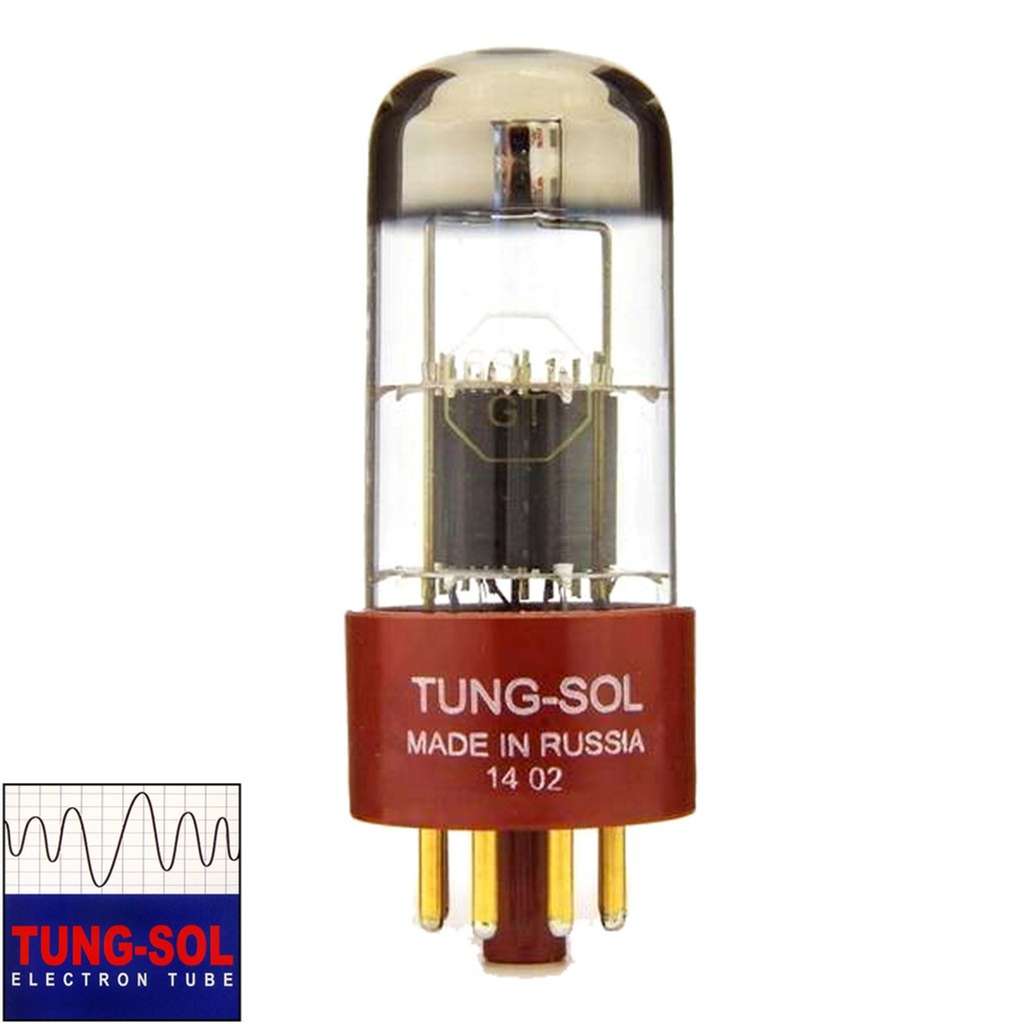
Tung-Sol 6SL7 vacuum tube
The Tung-Sol 6SL7, a modern production of the classic high-mu twin triode

Key Characteristics of the 6SL7

The 6SL7 is a high-mu (high amplification factor) twin triode housed in an octal base. Its defining features make it an excellent voltage amplifier. According to its datasheets, it boasts an amplification factor (µ) of around 70, which is significantly higher than its medium-mu cousin, the 6SN7 (µ of 20). This high gain comes with a trade-off: a relatively high plate resistance (Rp) of approximately 44 kΩ and a lower typical plate current of about 2.3 mA .

The 6SL7-GT is a high-mu twin triode designed for use in resistance-coupled circuits as a voltage amplifier or phase inverter. General Electric 6SL7-GT Datasheet

When implemented correctly in a circuit designed for its parameters, the 6SL7 is known for producing a warm and smooth sound, making it a favorite for the input stages of audio equipment where tonal character is paramount .

Why the 6SL7 is a Great Driver for the EL34

To drive a power tube like the EL34 to its full output, the driver stage must provide sufficient voltage swing. The 6SL7';s high amplification factor makes it perfectly suited for this task. A single 6SL7 triode section can easily take a standard line-level signal (around 1-2V) and amplify it to the ~20-40V peak-to-peak signal required at the EL34's control grid.

Furthermore, the 6SL7 exhibits excellent linearity, which ensures that the signal passed to the power stage is a clean, uncolored replica of the input, preserving the integrity of the music before the final power amplification and its associated harmonic coloration.

The Powerhouse: The Iconic EL34 Pentode

The EL34 is arguably one of the most famous power tubes in audio history. It is a pentode, meaning it has three grids (control, screen, and suppressor), which gives it high power sensitivity and efficiency.

The "British Sound" Embodied

The EL34 is the cornerstone of the ";British Sound." It powered legendary amplifiers from manufacturers like Marshall and Orange, shaping the sound of rock music from the 1960s onwards. Its sonic signature is often described as aggressive and forward, with a rich midrange and excellent headroom that allows for blistering, dynamic performances .

This character—a powerful and articulate voice—makes it not only a giant in the guitar world but also a compelling choice for high-fidelity audio, where it can deliver music with authority and presence.
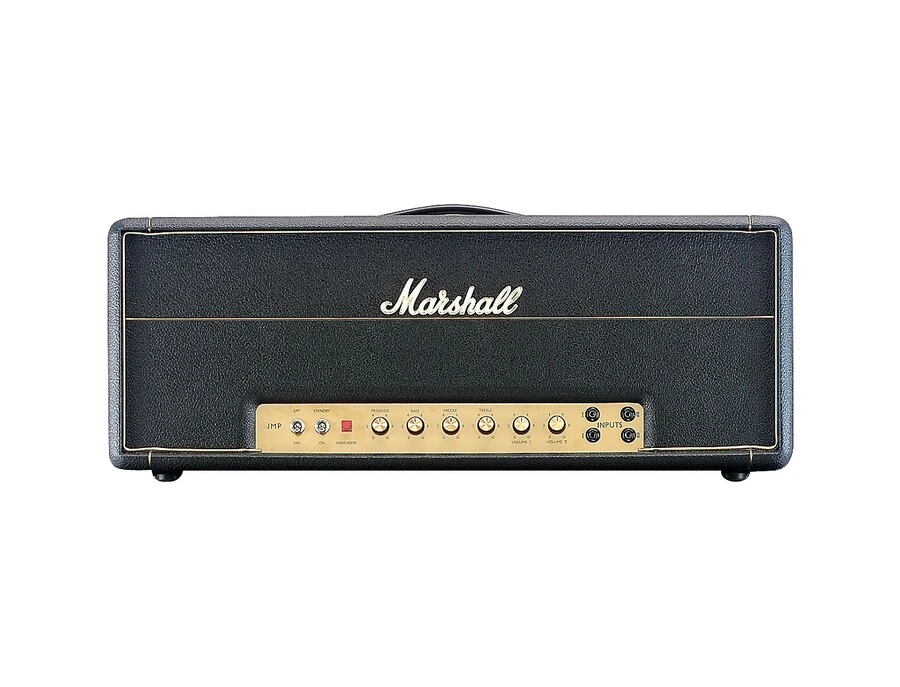
Marshall Plexi 1959SLP amplifier head
The Marshall Plexi, an iconic amplifier that defined the "British Sound" with its EL34 power stage

Operating the EL34 in a Single-Ended Configuration

While most famous for its use in push-pull circuits, the EL34 performs exceptionally well in a single-ended Class A design. In this topology, the entire signal is handled by one tube, biased to be constantly conducting. This requires careful management of its operating point to avoid exceeding its maximum plate dissipation, which is typically rated at 25 watts .

A key design choice is whether to run the EL34 in pentode mode or triode mode (by connecting the screen grid to the plate).

  • Pentode Mode: Delivers higher power output and efficiency, retaining the classic, punchy pentode character.
  • Triode Mode: Results in lower power output, lower distortion, and a lower output impedance, leading to a sound that is often described as smoother and more refined.
For this project, we will focus on the pentode connection to leverage the EL34's full power and characteristic tone.

Designing the Amplifier Circuit: Key Considerations

Building a stable and great-sounding amplifier requires careful attention to the operating points of each stage and the selection of key components like the output transformer.

The Driver Stage: Setting the 6SL7's Operating Point

The operating point, or Quiescent point (Q-point), defines the tube';s idle state. A well-chosen Q-point ensures the tube operates in its most linear region, minimizing distortion. A typical operating point for a 6SL7 in a preamp stage, derived from datasheets, is:

  • Plate Voltage (Ua): 250V
  • Grid Voltage (Ug): -2V
  • Plate Current (Ia): 2.3mA

To achieve this, a cathode resistor (Rk) is used to create the negative grid bias. Using Ohm's law (R = V/I), the cathode resistor would be 2V / 2.3mA ≈ 870Ω (a standard 820Ω or 910Ω resistor would work well). The plate load resistor (Rp) is chosen to set the plate voltage, typically in the range of 47kΩ to 100kΩ for this tube.

The Power Stage: Biasing the EL34

For an SE Class A amplifier, the tube idles at its maximum dissipation. The goal is to set an idle current that is high enough for Class A operation without exceeding the 25W plate dissipation limit. For example, with a plate voltage of 350V, the maximum idle current would be I = P/V = 25W / 350V ≈ 71mA. A safe and common practice is to idle at around 70-90% of max dissipation.

Let's choose a conservative idle point:

  • Plate Voltage (Va): 350V
  • Plate Current (Ia): 60mA
This results in an idle plate dissipation of 350V * 0.060A = 21 watts, which is safely within the 25W limit. The required negative grid voltage for this operating point can be found on the EL34's plate characteristic curves and is typically achieved with a cathode bias resistor.

The Output Transformer: The Critical Link

The output transformer (OPT) is perhaps the most critical component in a tube amplifier. Its functions are twofold:

  1. It matches the high output impedance of the EL34 (several kΩ) to the low impedance of a loudspeaker (typically 4Ω or 8Ω).
  2. It isolates the high DC voltage on the tube's plate from the speaker.

For a single-ended amplifier, the OPT must have an air-gapped core. This gap prevents the transformer's core from saturating due to the constant DC idle current flowing through its primary winding. For an SE EL34, a primary impedance (Z_p) of 3.5kΩ to 5kΩ is typical.
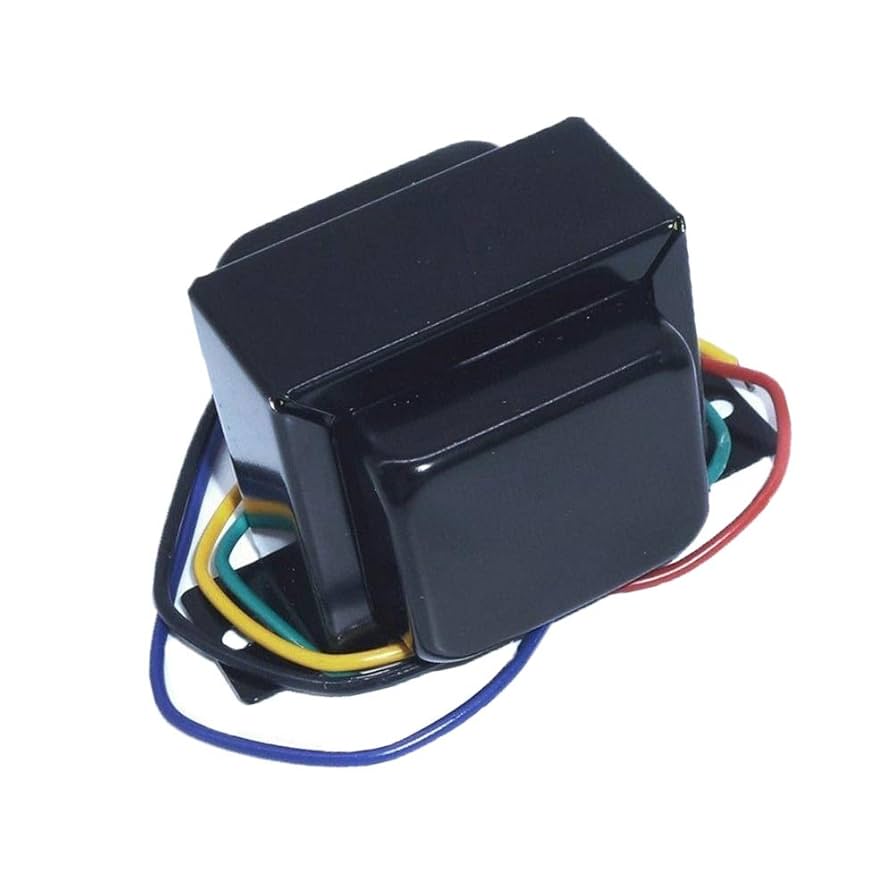
Single-ended audio output transformer
A single-ended output transformer with an air-gapped core, essential for handling DC idle current

Visualizing Performance: Plate Curves and Load Lines

To truly understand how the power stage will behave, engineers use plate characteristic curves and load lines. A plate curve graph plots plate current (Ip) versus plate voltage (Vp) for various fixed control grid voltages (Vg). The load line is a line drawn on this graph that represents the load presented by the output transformer. The slope of the load line is equal to -1/Z_p.

The intersection of the load line with the different grid voltage curves shows the path the tube's operation will follow as the input signal swings. The Q-point (our idle state) sits on this line. The chart below illustrates a typical set of plate curves for an EL34 with a 4kΩ load line originating from a 400V power supply (B+). The safe operating area is also shown, bounded by the 25W max plate dissipation curve.

The Sonic Signature: What to Expect

So, what does this amplifier sound like? The final sound is a beautiful synergy of its parts. The 6SL7 provides a clean, warm, and detailed signal to the power stage. The EL34, operating in Class A, takes this signal and imbues it with its characteristic richness and authority. The single-ended topology adds a layer of second-order harmonic distortion that is inherently musical, creating a sound that is lush, three-dimensional, and engaging.

You can expect a powerful bass response, a detailed and articulate midrange where the EL34 truly shines, and clear, extended highs. For Hi-Fi listening, it will present music with a sense of realism and emotional weight. For a guitar amplifier, it will offer a touch-sensitive response, transitioning from clean tones to a sweet, singing overdrive as you dig in—the hallmark of a great single-ended design .

Conclusion: A Timeless Combination for the Modern Builder

The 6SL7-driven EL34 single-ended amplifier is more than just an electronics project; it';s an exploration into the art of sound reproduction. It combines a high-gain, linear driver with a powerful and characterful output tube in a topology celebrated for its sonic purity. While it may not be the most efficient design in terms of power consumption, its reward is a sound that is deeply musical and satisfying.

For the modern DIY audio enthusiast, this classic pairing offers a direct connection to the golden age of tube amplification, resulting in a piece of equipment that is as rewarding to build as it is to listen to.

Reference

[5]
[7]
El34 Mullard | PDF | Vacuum Tube | Amplifier
https://www.scribd.com/document/603865526/el34-mullard
[9]
[10]
Tubes of Rock – The EL34 and the British Sound
https://orangeamps.com/articles/tubes-of-rock-el34-british-sound/
[11]
Single-Ended vs. Push-Pull Amplifiers: Top 5 Differences ...
https://affishopi.com/single-ended-vs-push-pull-amplifiers-top-5-differences-explained/
[13]
This is very strange - amp problem, help needed
https://el34world.com/Forum/index.php?topic=9547.0
[14]
[17]
Tube Amplifiers Explained, Part 8: Output Stage and ...
https://www.analogethos.com/post/output-stage-pentode
[19]
Single-ended Guitar Amps: Pros & Cons - Dr Marshall Heiser
https://marshallheiser.com/2017/01/20/single-ended-guitar-amps-pros-cons/
Published By IWISTAO

Friday, January 3, 2025

The Ultimate Upgrade? Exploring Amorphous C-Core Output Transformers for the 300B Tube Amp

Amorphous C-Core Output Transformers for the 300B Tube Amp

The Ultimate Upgrade? Exploring Amorphous C-Core Output Transformers for the 300B Tube Amp

For decades, the 300B direct-heated triode has been the heart of many legendary high-fidelity amplifiers. Revered for its low distortion, exceptional linearity, and the ability to reproduce music with a captivating warmth and nuance, it represents a pinnacle of audio tube technology. However, the performance of any 300B amplifier is not dictated by the tube alone. A critical, and often underestimated, component stands between the tube and the speakers: the output transformer (OPT). Today, we delve into how a modern material—the amorphous C-core—is revolutionizing this classic pairing.

The Quest for Sonic Purity: The Role of the Output Transformer

The output transformer is arguably the most crucial component in a tube amplifier's signal path. Its primary job is to act as an impedance-matching device. A 300B tube operates at a high impedance (typically around 700 ohms), while loudspeakers have a very low impedance (usually 4 or 8 ohms). The OPT efficiently transfers the audio power from the tube to the speaker by transforming this impedance. This matching is essential for preventing signal loss and distortion.

Beyond impedance matching, the OPT also provides crucial DC isolation, preventing the high DC voltage from the tube's plate from reaching and damaging the speaker. In essence, the transformer must pass the delicate AC audio signal perfectly while blocking the powerful DC current. The quality of the transformer's core material and its design directly impact its ability to perform this task without coloring the sound, losing detail, or limiting the frequency response.

A Tale of Two Cores: Traditional Silicon Steel vs. Modern Amorphous Metal

The core is the heart of the transformer, providing a path for the magnetic flux. The material used for the core profoundly influences the transformer's efficiency and sonic characteristics.

The Veteran: Silicon Steel (CRGO) Cores

For many years, Cold-Rolled Grain-Oriented (CRGO) silicon steel has been the standard for audio transformers. It offers high magnetic permeability and relatively low core loss, making it a cost-effective and reliable choice. Silicon steel has been the go-to material for decades, and well-designed transformers using it can produce excellent sound. However, it is not without its limitations, particularly concerning energy losses that manifest as heat and can subtly degrade the audio signal.

The Challenger: Amorphous C-Cores

Amorphous metal is a relatively new class of magnetic material. Unlike silicon steel, which has a regular crystalline structure, amorphous alloys are formed by rapidly cooling molten metal, freezing the atoms in a random, non-crystalline state. This unique structure gives it extraordinary magnetic properties.

The primary advantage of amorphous cores is their significantly reduced core losses. These losses, comprising hysteresis and eddy current losses, are major sources of energy wastage and signal degradation in transformers. The non-crystalline structure of amorphous metal dramatically cuts down these losses. This results in higher efficiency and significant energy savings over time.

For audio applications, this low-loss characteristic is paramount. Less energy lost as heat means more of the delicate audio signal is faithfully transferred, potentially leading to greater transparency and detail.

Core Loss Comparison: A Visual Analysis

The difference in core loss between amorphous metal and traditional silicon steel is not subtle. The chart below illustrates the typical disparity in energy loss (measured in watts per kilogram) under similar magnetic conditions. This fundamental efficiency advantage is the primary reason amorphous cores are gaining traction in high-performance applications.

Note: Values are representative for comparison at a typical operating frequency and flux density. Actual losses vary with specific material grades and conditions.

Designing the Perfect Match: The Amorphous C-Core 300B SE Output Transformer

Pairing an amorphous core with a 300B tube isn't just about swapping materials; it involves specific design considerations tailored to the unique demands of a Single-Ended (SE) amplifier circuit.

Taming the DC Bias: The Single-Ended (SE) Challenge

A 300B tube in a classic SE Class A circuit constantly draws a significant amount of DC current through the primary winding of the output transformer (typically around 60mA). This DC current can easily saturate a standard transformer core, causing massive distortion and a collapse of inductance. To prevent this, SE output transformers must have a small air gap in their magnetic path.

This is where amorphous C-cores shine. They possess a high saturation flux density, meaning they can handle a strong magnetic field before saturating. This property, combined with their low loss, allows designers to create a gapped transformer that maintains high inductance even with the DC bias, a key factor for achieving deep and authoritative bass.

Achieving Full-Spectrum Fidelity: Key Design Parameters

A great audio transformer must perform well across the entire audible spectrum (20Hz to 20kHz). This requires balancing several competing parameters:

The Sonic Signature: What to Expect from an Amorphous Core OPT

Translating technical advantages into audible qualities, an amplifier equipped with a well-designed amorphous core OPT often exhibits:

  • Enhanced Transparency and Detail: With significantly lower core losses, less magnetic "smearing" of the signal occurs. This allows micro-details, subtle textures, and the decay of notes to come through with greater clarity. The sound is often described as more immediate and transparent.
  • Improved Bass Definition: The ability to maintain high primary inductance under DC load results in a bass response that is not only deep but also tight and well-defined. Instead of a boomy or one-note bass, you get texture and pitch definition in the lower octaves.
  • Lower Noise Floor: Amorphous core transformers tend to produce less audible mechanical noise (hum or buzz) during operation due to reduced magnetostriction and vibration. This contributes to a blacker, quieter background from which the music can emerge.

Is It Worth the Investment? Cost vs. Performance

There is no denying that amorphous core transformers come at a premium. The material itself is more expensive to produce than silicon steel. The higher initial cost is a significant factor in their adoption. For many, a high-quality silicon steel OPT will provide a deeply satisfying musical experience.

However, for the audiophile in pursuit of the highest possible fidelity, the amorphous core represents a logical and compelling upgrade. When you are already investing in a premium tube like the 300B and its surrounding circuitry, ensuring the final link in the chain—the output transformer—is of the highest possible quality makes perfect sense. The sonic improvements in transparency and resolution can be the final piece of the puzzle in achieving a truly lifelike sound.

Conclusion: A New Frontier for a Classic Tube

The pairing of the venerable 300B tube with a modern amorphous C-core output transformer is a perfect example of how cutting-edge material science can elevate classic audio technology. While traditional silicon steel cores remain a viable and budget-friendly option, amorphous cores offer a clear path to superior performance.

By dramatically reducing core losses and enabling designs with high inductance and bandwidth, amorphous C-core transformers allow the legendary 300B to deliver its full potential. For those seeking to extract every last ounce of musical information and emotional impact from their system, this combination represents a new benchmark in sonic purity and a worthy investment in the art of sound reproduction.

Reference

[1]
300B Vacuum Tube Hi-Fi Amplifier- Circuits - EEWORLD
https://en.eeworld.com/circuit/view/98637
[2]
Unconventional 300b Amplifier Design: Schematic …
https://wirecrafted.com/300b-amplifier-schematic.html
[3]
300B.pdf - Frank's electron Tube Data sheets
https://frank.pocnet.net/sheets/084/3/300B.pdf
[9]
[11]
[12]
[13]
Analysis of Effect of Winding Interleaving on Leakage …
https://link.springer.com/article/10.1007/s42835-019-00129-6
[15]
Amorphous Metal Core vs. Traditional Silicon Steel - Transmart
https://www.transmart.net/amorphous-metal-core-vs-traditional-silicon-steel-which-is-better
Published by IWISTAO

Wednesday, December 4, 2024

Down by the Salley Gardens Full Version from a Big Vacuum Tube Amplifier

Down by the Salley Gardens Full Version from a Big Vacuum Tube Amplifier

Although this vacuum tube amplifier generates a lot of heat, it has an unexpected benefit—keeping you cozy during winter evenings. Imagine the warmth of the amplifier complementing your favorite music as you relax. Why not brew a cup of coffee, settle into a comfortable chair, and enjoy the beautiful melodies filling the room? Truly, isn’t this one of life’s simple pleasures?


Tuesday, December 3, 2024

Michael Jackson's iconic song "Bad" from IWISTAO HIFI Power Amplifier 80Wx2 Stereo NAP140

Michael Jackson's iconic song "Bad" from IWISTAO HIFI Power Amplifier 80Wx2 Stereo NAP140 


The IWISTAO HIFI Power Amplifier 80Wx2 Stereo NAP140 is a product that audiophiles will find particularly intriguing. Modeled after the legendary Naim NAP140, this amplifier carries the essence of what makes Naim amplifiers so revered in the audio community. Often compared to Linn turntables in their iconic status, Naim amplifiers are known for their warm and mellow tones, delivering a listening experience that captures the hearts of true music enthusiasts. 


Despite its understated appearance, the Naim NAP140 has gained a cult following for its ability to provide a rich and immersive audio experience. While the price of Naim amplifiers can be steep, those who appreciate expert craftsmanship and superior sound quality find the investment worthwhile. This amplifier isn’t just a device; it’s an experience. Once you’ve listened to it, it’s hard to imagine settling for anything else. 


Personally, I hold the NAP140 circuit in high regard, comparable to my affection for the iconic 1969 circuit. While the sound quality of the NAP140 is on par with the 1969 circuit, it surpasses it in terms of output power. A defining characteristic of the NAP140’s architecture is its predominantly second-harmonic distortion, which lends it a tonal quality reminiscent of the charming warmth of tube amplifiers. However, unlike tube amplifiers, the NAP140 achieves this harmonic richness with remarkable efficiency and precision. 


The IWISTAO HIFI Power Amplifier brings the essence of the Naim NAP140 to a wider audience, offering a taste of its renowned mellow and soft sound. For those who value musicality and tonal charm, this amplifier is a compelling option that bridges the gap between classic designs and modern accessibility. 


A demo video showcases the amplifier’s performance using Michael Jackson's iconic song "Bad." You can view it here to experience the sound quality for yourself. 


https://iwistao.com/products/iwistao-hifi-power-amplifier-80wx2-stereo-refer-naim-nap140-mellowsoft-sound-tube-taste-black-whole-aluminum-casing-high-quality

Tuesday, November 26, 2024

Friend Don't Cry from IWISTAO 5.25 Inch Coaxial Speaker LS50

Friend Don't Cry from IWISTAO 5.25 Inch Coaxial Speaker LS50


This is a 5.25 inch coaxial empty speaker cabinet with solid wood. Exquisite craftsmanship, pure sound quality, high density and strong anti-resonance ability.


For the empty speaker cabinet, please click here,


Tuesday, October 22, 2024

IWISTAO HIFI 8 Inch Full Range Speaker Empty Cabinet 1 Pair Finished Wood Labyrinth Structure Blank Version for Tube Amp

 IWISTAO HIFI 8 Inch Full Range Speaker Empty Cabinet 1 Pair Finished Wood Labyrinth Structure Blank Version for Tube Amp


This speaker cabinet is made of solid wood. Built-in a labyrinth structure, it can enhance the low-frequency radiant energy, make low-frequency dive deeper, effectively overcoming insufficient bass of commend full range speaker cabinet, make the speaker cabinet the full-frequency be more full and rich.

Friday, September 6, 2024

IWISTAO HIFI Bluetooth 5.1 Stereo Decoder Qualcomm QCC5125 Hardware Decoding Bluetooth Optical Inputs APT-HD LDAC

 IWISTAO HIFI Bluetooth 5.1 Stereo Decoder Qualcomm QCC5125 Hardware Decoding Bluetooth Optical Inputs APT-HD LDAC


Overall sound performance of this decoder is full of simulation, its vocals are rich in emotion, and the performance of slow music is also very good, full of vinyl flavor.


👇👇👇


https://iwistao.com/products/iwistao-hifi-bluetooth-5-1-stereo-decoder-qualcomm-qcc5125-hardware-d