Showing posts with label Single-ended. Show all posts

Monday, January 19, 2026

My LS3/5A Journey

My LS3/5A Journey

Published by IWISTAO

Immersed reading—like disappearing into a novel.

When it comes to hi-fi, the British BBC LS3/5A is a hurdle almost no audiophile can avoid. If you try to list the loudspeakers that have not only survived decades but also appreciated dramatically, the LS3/5A would likely rank near the very top.

In 2004, Taiwan’s Audio Forum published a supplement titled Everlasting Classics, and one article there pointed out that the LS3/5A was among the most recommended and most frequently featured pieces of equipment. Twenty-one years have passed since then—and even today, the situation has not changed much.


Early Research: Hong Kong and “Ah Ming”

The earliest person to conduct a dedicated, systematic study of the LS3/5A was a Hong Kong audiophile known as “Ah Ming.” Many years ago, he self-published a book titled The Immortal Legend of Loudspeakers: LS3/5A, priced at HKD 80 at that time. Although deeper research later revealed a few inaccuracies in that book, for LS3/5A fans at the time, it was practically a must-have—almost everyone owned a copy.

Immortal Legend of Loudspeakers: LS3/5A


15Ω and 11Ω: Two Production Eras

From 1974 to 1987, the LS3/5A belonged to what is often called the 15-ohm era. The main producers included Rogers, Spendor, Audiomaster, Chartwell, Goodmans, and RAM.

From 1988 to 1998, it entered the 11-ohm era, with production mainly by Rogers, Spendor, Harbeth, and KEF. Among these, the two brands that truly spanned both eras were Rogers and Spendor.

The LS3/5A earned its fame in the 1980s, but it reached the broader market largely in the late 1980s— primarily during the 11-ohm period. It then became widely popular amid the early-1990s audiophile boom, continuing until 1998, when KEF discontinued the T27 tweeter and B110 mid-bass driver. In other words, during the hottest years of the 1990s, most people were actually listening to 11-ohm LS3/5A, and Rogers / Harbeth / KEF / Spendor effectively “ruled the world.”


Why LS3/5A Became My First Target (1995)

When I planned to buy my first hi-fi system in 1995, my target was already the LS3/5A. There were two major influences behind that decision.

Influence #1: A 1994 Magazine Article That Shaped My Thinking

In 1994, while browsing the CD section of a bookstore, I discovered a magazine called Audiophile (I believe it was the second issue). Inside was a beginner’s guide article titled “A Hi-End Starter Audio System”, which had a strong impact on me.

That article was my first real introduction to the idea of the “British sound.” It argued that when choosing speakers, it is best to start with classic British designs that prioritize midrange integrity and soundstage construction—ideally BBC-derived designs like the LS3/5A. This approach, it said, is hard to get wrong, holds value well, and delivers strong musical expressiveness. It even suggested using a tube amplifier (such as 300B tube amp) and a CEC 891R CD player—spending modestly, yet establishing a correct listening philosophy.

Looking back now, those viewpoints were surprisingly solid. It really was a proper path for beginners. From then on, I developed a deep affection for the BBC-influenced British sound.

Influence #2: A Spark Audio Demo That Sounded Like Heaven

The second influence happened around January 1995. Spark Audio—newly founded at the time—held a small promotional event. If I remember correctly, there were two sessions, and I attended both.

Spark showcased two tube amplifiers: the Model 560 using FU29 tubes, and the Model 550 using 300B tubes. The event mainly used the 560. The speakers included a pair of Rogers 11-ohm rosewood BBC LS3/5A, an LS5/9, and a pair of PSB 800 floorstanders.

Spark FU29 tube amplifier
LS 35A 

The Rogers LS3/5A belonged to the host himself—well known as a radio program presenter in the audiophile world. He wasn’t tall, wore a small mustache (a bit like George Lam), had a musical background, spoke with wit and ease, and hosted the event brilliantly.

When the 560 drove the LS3/5A, the sound was, to me at that time, simply otherworldly. I still remember listening to Zhu Zheqin’s Yellow Children. The top-end had excellent density—warm, sweet, and smooth. The musical expression was rich and deeply moving. That demonstration left the LS3/5A with an exceptionally beautiful image in my mind.

When LS3/5A Sounds Bad (Yes, It Can Happen)

Of course, I have also heard LS3/5A systems that sounded genuinely poor. For example, at the audio section of a foreign-language bookstore, there was a Rogers LS3/5A paired with an AB1 bass unit. And at a hi-fi center, I heard a Rogers 11-ohm pair. In both cases, they were driven by a Rotel integrated amplifier (the 960BX, if I recall correctly). The speakers were severely under-driven—nothing opened up, and the results were disappointing.

That’s the thing about the LS3/5A: if you don’t drive it properly, it can make you doubt the legend itself. (Laughs.)


The Long “Knot in the Heart” (1995 → 2015)

Even in the autumn of 1995, I still didn’t manage to buy an LS3/5A. The reason was simple: the dealers had no Rogers stock. Harbeth was available, but it cost 11,500 HKD—far beyond my budget. Spendor and KEF were rare and not cheap either. Later, around 1998, a Spendor pair cost about 9,300 HKD, while a piano-black KEF version was even more expensive—around 14,000 HKD.

Still, the LS3/5A remained a “knot in my heart.” Before 2015, I owned several speakers; two of them leaned heavily toward the traditional British sound: the Castle Inversion 15 and the Harbeth Super HL5 in rosewood. Finally, in the autumn of 2015, I acquired a Spendor 11-ohm LS3/5A with a bi-wire crossover— and that long-held wish was finally fulfilled.

Spendor LS 35A Bi-wire 11 ohm version
Spendor LS 35A Bi-wire 11 ohm version 1

Spendor LS 35A Bi-wire 11 ohm version 2


A few years later, I added a second pair: a ProAc LS3/5A in ebony veneer. At that point, I owned two pairs of 11-ohm LS3/5A at the same time.

ProAc LS3/5A in ebony veneer 11 ohm
ProAc LS3/5A in ebony veneer 2
ProAc LS3/5A in ebony veneer 3
ProAc LS3/5A in ebony veneer 4
HARBETH LS35A BBC
HARBETH LS35A BBC 2


Living with Two Pairs of 11-Ohm LS3/5A

I drove these two LS3/5A pairs with two amplification setups: an Exposure 15.2, and a classic Naim chain consisting of a NAC 32 preamp, SNAPS power supply, and NAP 160 power amp.

Overall, the two 11-ohm LS3/5A pairs were remarkably consistent in their character. Compared with the ProAc Super HL5 30th Anniversary (rosewood) that I had used for a long time, the LS3/5A put more emphasis on vocals—more captivating and emotionally “pulling” in a direct way. Vocals separated from the ensemble more clearly. The upper-mid and treble density was higher than the Super HL5, and female vocals had stronger penetration. The presentation felt more active and animated.

The decay was longer and more flavorful, and the treble stood out more. Naturally, the bass quantity was not as abundant as the Super HL5—after all, this is a 5-inch driver— but it still conveyed a convincing sense of scale. Imaging and localization were exceptionally strong; that advantage was obvious.

The Super HL5’s strength, on the other hand, is its ability to build atmosphere and tell a musical story— its sense of emotional narration is truly wonderful.

Rager LS 35A
Naim audio preamplifier
Naim power amplifier


Back to 15 Ohms (2024 → Present)

In November 2024, since I no longer had either of my 11-ohm LS3/5A pairs, I purchased a pair of Rogers black-label 15-ohm LS3/5A, paired with Yue stands. A 15-ohm pair is something you simply must own—at least that’s how it feels. (Laughs.)

Roger L35 A
Roger LS35A 1
ROGER LS35A 3

Then, in September of this year, to properly match the 15-ohm LS3/5A, I acquired a Line Magnetic “Ange” AS-135 300B single-ended tube amplifier and upgraded the full set of tubes.

With the AS-135 driving the LS3/5A, everything felt perfectly “on the right track.” The black-label LS3/5A seemed to grow into a small giant: richer midrange body, longer trailing decay, extremely high mid-to-high density, and abundant detail. The overall performance clearly surpassed what I achieved with my previous solid-state amplifiers.

300B tube amplifer
300B tube amp
Roger LS35A plus 300B tube amplifier


Once again, this confirmed an old belief: the LS3/5A is better suited to voltage-driven tube amplification. The saying “LS3/5A won’t sing without tubes” truly has a solid basis.

Conclusion

For veteran audiophiles, owning a pair of LS3/5A almost feels like a matter of course. As for which brand—or whether it is 11 ohms or 15 ohms—those details feel less important in the end.

Because in the world of BBC LS3/5A, there is one simple truth: If it’s an LS3/5A, it sounds good.

Wednesday, January 7, 2026

EL34 Bias Adjustment Guide (SE and PP)

EL34 Bias Adjustment Guide (SE and PP)

Published by IWISTAO

Single-Ended (SE) and Push-Pull (PP) Tube Amplifiers

Bias adjustment is one of the most critical procedures in tube amplifier setup. In real-world engineering practice, incorrect bias accounts for a large percentage of tube failures, excessive distortion, transformer overheating, and unstable operation.

This article provides a practical, engineering-oriented guide to EL34 bias adjustment, covering both single-ended (SE) cathode bias and push-pull (PP) fixed bias amplifiers.


1. What Is Bias in a Tube Amplifier?

Bias defines the idle operating point of a vacuum tube when no audio signal is present. Electrically, it determines idle current, grid-to-cathode voltage, and static plate dissipation.

A correctly biased EL34 operates within its safe dissipation limits and in a linear region of its transfer characteristics. An incorrectly biased tube will either run too cold (increased distortion) or too hot (red plating and shortened tube life).


2. EL34 Single-Ended (SE) — Cathode Bias

Most EL34 single-ended amplifiers use cathode (self) bias. A power resistor between the cathode and ground automatically generates the required bias voltage as current flows through the tube.


(The testing point with red voltage just for you information)

2.1 Key Bias Nodes in a Real EL34 SE Schematic

  • Plate (Anode): typically 380–430 V (used for dissipation calculation)
  • Cathode (Vk): typically 30–40 V (primary bias measurement point)
  • Cathode resistor (Rk): usually 390–560 Ω, 5–10 W
  • Cathode bypass capacitor (Ck): 100–470 µF, correct polarity essential
  • Control grid (G1): near 0 V DC via grid-leak resistor


2.2 Bias Calculation (EL34 SE)

Ik = Vk / Rk

Pplate ≈ (B+ − Vk) × Ik

For long-term reliability, most EL34 SE amplifiers operate with 18–22 W plate dissipation.


3. EL34 Push-Pull (PP) — Fixed Bias

While EL34 SE amplifiers prioritize simplicity and stability, most EL34 push-pull (PP) amplifiers use fixed bias to achieve higher output power and efficiency.


3.1 Essential Bias Subsystems in EL34 PP Amplifiers

  • Negative bias supply (−Vbias): typically −40 to −55 V
  • Bias adjustment network: potentiometer distributing bias to each EL34 grid
  • Cathode structure: near ground, often with 1 Ω sense resistors for measurement

3.2 Bias Adjustment Targets (EL34 PP)

Typical operating conditions:

  • B+ ≈ 400–430 V
  • Idle current: 35–45 mA per tube
  • Plate dissipation: approximately 60–70% of maximum rating

4. IWISTAO Reference Bias Windows

EL34 SE (Single-Ended)

  • B+: 400–420 V
  • Rk: 470 Ω / 10 W
  • Ik: 65–75 mA
  • Plate dissipation: 18–22 W

EL34 PP (Push-Pull, Fixed Bias)

  • B+: 410–430 V
  • −Vbias: −42 to −50 V (adjustable)
  • Idle current: 38–42 mA per tube
  • Channel matching: within ±5%

5. EL34 Bias Adjustment Checklist

Before Power-On

  • Verify cathode bypass capacitor polarity (SE)
  • Confirm −Vbias presence and range (PP)
  • Ensure control grids are not positive

After Warm-Up

  • No red plating
  • Bias current within target range
  • Push-pull tubes closely matched

Conclusion

Bias adjustment in tube amplifiers is not a tuning trick—it is a fundamental engineering requirement.

In EL34 single-ended amplifiers, bias is established by design. In EL34 push-pull amplifiers, bias must be set and maintained by the engineer.

Correct biasing directly determines sound quality, tube life, and transformer safety.


References & Sources

The following references were consulted for circuit topology, biasing practice, operating limits, and schematic conventions used in this article. All sources are publicly available and widely regarded as authoritative within the tube amplifier engineering community.


1. EL34 Datasheets & Tube Operating Limits

Mullard EL34 Datasheet (Original Reference)

  • Primary source for EL34 maximum plate dissipation, bias recommendations, and characteristic curves

  • Classic and historically authoritative

🔗 https://frank.pocnet.net/sheets/093/e/EL34.pdf

Philips / Mullard EL34 Technical Data

  • Cross-reference for electrical limits and operating conditions

🔗 https://frank.pocnet.net/sheets/030/e/EL34.pdf


2. EL34 Single-Ended (SE) Cathode Bias Circuits

EL34world — EL34 Tube Information & Circuits

  • Widely used reference site for practical EL34 SE and PP circuits

  • Includes multiple real-world schematics and bias discussions

🔗 https://el34world.com/

DIY Fever — Tube Amplifier Grounding & Power Supply Concepts

  • Referenced for grounding and cathode-bias current flow behavior

🔗 https://diy-fever.com/

Morgan Jones, Valve Amplifiers (4th Edition)

  • Definitive modern engineering text on valve amplifier design

  • Referenced for cathode bias behavior, dissipation calculations, and safety margins

📘 ISBN: 978-0080960035


3. EL34 Push-Pull (PP) Fixed Bias Circuits

Mullard 5-20 Amplifier Documentation

  • Canonical example of EL34 push-pull operation

  • Reference for fixed-bias topology and power-stage behavior

🔗 https://www.diyaudio.com/community/attachments/mullard_5-20-pdf.154623/

Sound-au (Rod Elliott) — Valve Amplifier Bias & Power Supplies

  • Engineering-grade explanations of fixed bias, cathode bias, CRC vs CLC filtering

🔗 https://sound-au.com/valves.htm
🔗 https://sound-au.com/articles/psu.htm


4. Bias Measurement & Engineering Practice

RCA Receiving Tube Manual (RC-30)

  • Classic reference for biasing practice, measurement methodology, and safe operating areas

🔗 https://worldradiohistory.com/BOOKSHELF-ARH/RCA/RCA-Receiving-Tube-Manual-1960.pdf

Merlin Blencowe (The Valve Wizard)

  • Practical biasing, grounding, and troubleshooting guidance for real amplifiers

🔗 https://www.valvewizard.co.uk/


5. General Tube Amplifier Design & Service References

Radiotron Designer’s Handbook (4th Edition)

  • Foundational reference for valve amplifier theory and design

🔗 https://worldradiohistory.com/BOOKSHELF-ARH/Technology/Radiotron-Designers-Handbook-4th-Edition.pdf

DIYAudio Community (Technical Archives)

  • Used for cross-checking practical bias ranges and failure modes

🔗 https://www.diyaudio.com/community/


Citation Note (Recommended to Include)

You may optionally add the following note at the end of your blog:

All schematics shown are used for educational and technical reference purposes.
Component values and operating points should always be verified against the specific amplifier design and transformer ratings before implementation.

Tuesday, August 5, 2025

The FU50 Amplifier: Unpacking the "Little 300B" Legend

The FU50 Amplifier: Unpacking the "Little 300B" Legend

The FU50 Amplifier: Unpacking the "Little 300B" Legend

In an era dominated by digital precision and solid-state efficiency, the warm, glowing heart of the vacuum tube amplifier continues to captivate audiophiles. It represents a connection to the golden age of audio, a time when sound was sculpted by hand-wired circuits and glowing glass. Among the pantheon of audio tubes, some are legends, like the Western Electric 300B. Others are unsung heroes. The FU50 falls into the latter category—a rugged, military-grade pentode that has found a second life as the core of surprisingly musical and affordable Hi-Fi amplifiers, earning it the intriguing nickname: the ";little 300B."

From Battlefield to Listening Room: The Unlikely History of the FU50

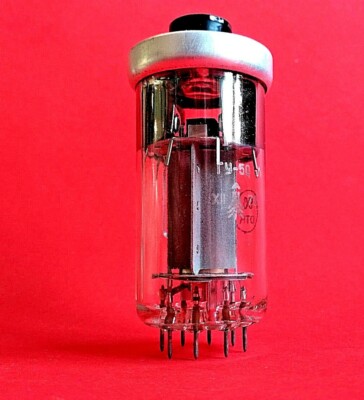
The story of the FU50 is a fascinating journey through 20th-century geopolitics and technology transfer. Its lineage begins not in an audio lab, but in wartime Germany with the Telefunken LS-50 power pentode. This robust tube was designed for radio frequency (RF) applications in military equipment. After World War II, its design was replicated in the Soviet Union as the GU-50 (ГУ-50), intended for use in military transmitters and RF amplifiers, capable of operating at frequencies up to 120 MHz. The Valve Museum notes its design was specifically for Russian mobile military equipment, featuring a distinctive top handle for quick replacement in the field.

This Soviet design and its manufacturing tooling eventually made their way to China. As discussed in forums like diyAudio, the Chinese tube industry was heavily influenced by Russian designs. The result was the FU50, a near-equivalent of the GU-50, initially produced for similar RF purposes. It was only later that the global Hi-Fi and DIY audio communities discovered its potential for high-quality sound reproduction, transforming this military workhorse into an audiophile darling.

GU-50 Vacuum Tube
The Soviet GU-50, a military-grade power pentode and the direct predecessor to the FU50

The "Little 300B": Analyzing the Sonic Signature

The FU50's reputation is built largely on its performance in audio amplifiers, particularly when wired as a triode in a single-ended configuration. This is where the "little 300B" comparison originates.

The Allure of Single-Ended Class A

Most FU50 amplifiers are single-ended Class A designs. This circuit topology is revered by audiophiles for its sonic purity. In a Class A amplifier, the output tube conducts current through the entire signal cycle, resulting in very low crossover distortion. As noted by audio experts, this design often produces a high level of even-order harmonic distortion, which the human ear perceives as musically pleasing warmth and richness. This "harmonic glow" is what gives many tube amps their signature "warm, lush, and musical" sound, making vocals and acoustic instruments feel more lifelike.

How Does It Really Sound?

User reviews and expert opinions paint a consistent picture of the FU50's sound. It's often described as having a "sweet and full warm vocal flavor." An amplifier from IWISTAO is praised for its ability to produce a sound that is "pure and delicate," with a "very strong tube taste."

However, it's not just about warmth. One experienced user on a diyAudio forum offered a compelling counterpoint, describing their FU50 amp in the highest terms of neutrality:

Like all the best amps I have ever listened to, built and/or owned, it recedes into the background. It has no character... One simply listens to the music – the amp does not “impress” the listener at all.

This suggests that while the FU50 can deliver classic tube warmth, it can also achieve a high degree of transparency, allowing the music to speak for itself without excessive coloration.

The 300B Comparison: Hype vs. Reality

The "little 300B" nickname stems from the claim that the FU50';s characteristic curves, when operated in triode mode, are very similar to those of the legendary Western Electric 300B. But does it truly measure up?

According to a detailed review on the Cheaptubeaudio blog, the FU50 gets remarkably close for its price. The reviewer notes that while a good 300B amplifier still possesses a more "organic and luscious" and "tonally sophisticated" sound, the FU50 is a formidable contender. It delivers a level of finesse that can outshine other budget single-ended amps based on tubes like the EL34 or 6L6. While it may not have the same power reserve or benign clipping characteristics as a true 300B, its performance-to-price ratio is almost unbeatable.

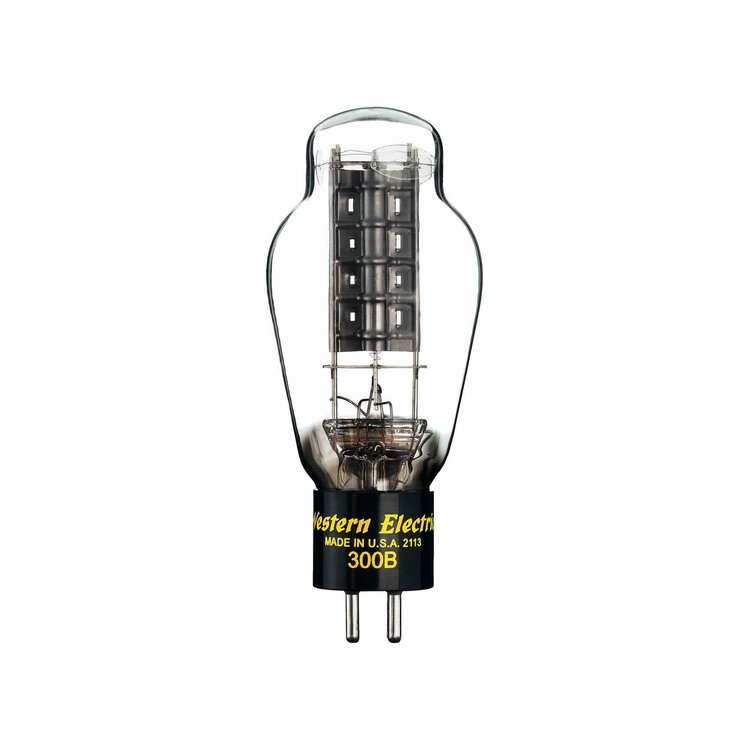
Western Electric 300B Tube
The legendary Western Electric 300B, the benchmark against which the FU50 is often compared

Anatomy of an FU50 Amplifier: Design and Circuitry

The appeal of FU50 amplifiers goes beyond their sound; their design, accessibility, and the culture around them are key parts of their story.

Common Circuit Topologies

Most FU50 amps use a single-ended circuit where the pentode FU50 is wired to operate as a triode. The choice of driver tube is a key design variation. Many kits and finished amps use the Soviet 6J8P (a pentode equivalent to the American 6SJ7) as a driver. This is significant because, as the Cheaptubeaudio review points out, this configuration bears a resemblance to the classic Western Electric 91A circuit, which famously used a pentode to drive the 300B triode. Another common option is the 6N8P (a double-triode equivalent to the 6SN7), which offers a different sonic flavor.

The DIY Spirit and Kit Culture

A major factor in the FU50's popularity is its embrace by the Do-It-Yourself (DIY) community. Thanks to the availability of inexpensive tubes and transformers from Chinese sources, building an FU50 amplifier is a highly accessible project. Brands like "Dragon & Phoenix" offer complete kits that include all parts and circuit diagrams.

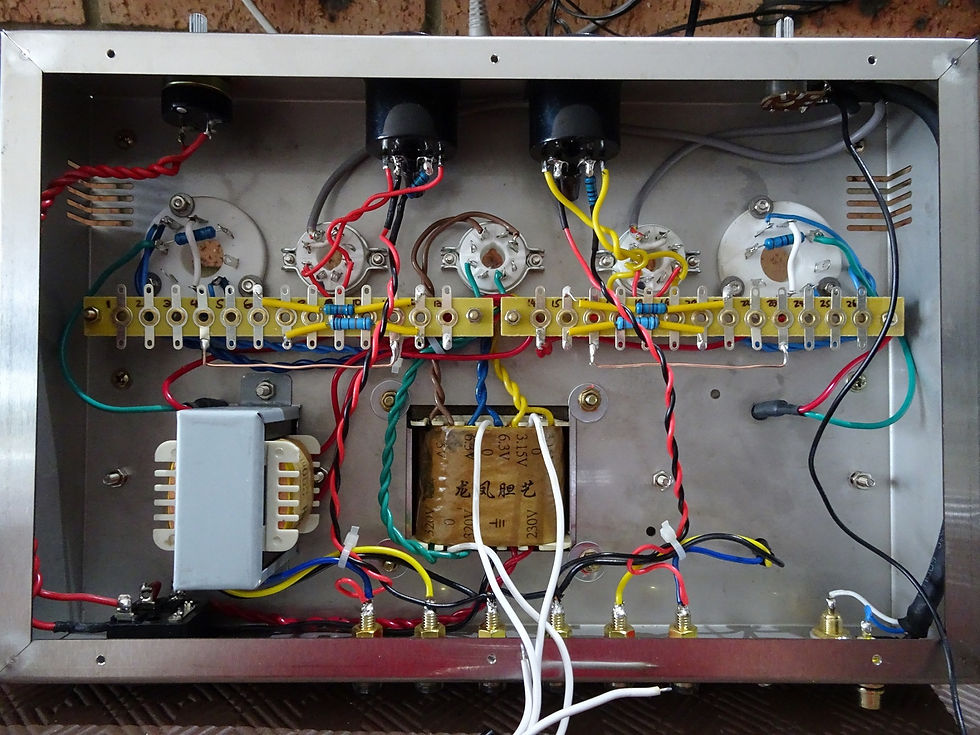
Building from a kit can be a rewarding experience, but it's not without challenges. DIY builders often report needing to troubleshoot issues like transformer hum, which typically requires careful implementation of grounding techniques, such as a proper star earth ground, to resolve. The satisfaction of building your own high-quality tube amp, however, is a powerful motivator for many enthusiasts.

Internal wiring of a FU50 tube amplifier kit
The intricate hand-wired interior of a "Dragon & Phoenix" FU50 amplifier kit, showcasing the complexity of a DIY build

Build Quality and Features

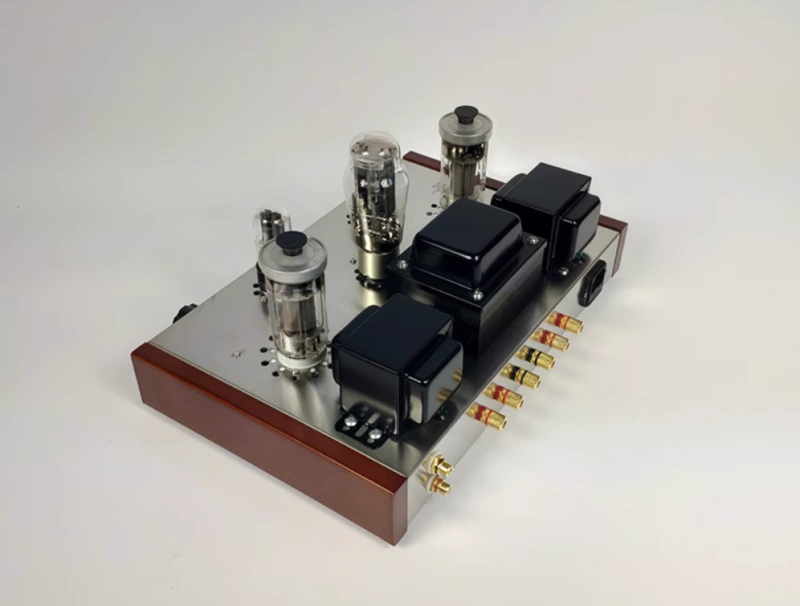
While DIY is a popular route, many commercially available FU50 amplifiers offer impressive build quality that belies their modest price. Reviewers frequently praise the "fabulous" construction of models like the BRZ FU-50, highlighting its luxurious milled aluminum chassis that surpasses many more expensive "high-end" offerings. These amplifiers are not just bare-bones circuits; modern designs often incorporate a range of features, including multiple switchable inputs for CD players, USB DACs, and even MM phono stages for turntables, making them versatile hubs for a complete audio system.

A finished FU50 tube amplifier
A finished FU50 amplifier, showcasing the high-quality build with a polished top plate and wooden side panels often found in commercial models

Getting the Most Out of Your FU50 Amp

To unlock the full potential of an FU50 amplifier, two factors are critical: speaker matching and tube selection.

The Importance of Speaker Matching

FU50 amplifiers are low-power devices, typically delivering between 8 to 13 watts per channel. This makes speaker pairing crucial. They perform best with high-sensitivity speakers (generally rated at 90 dB/watt or higher). Efficient speakers allow the amplifier to reach satisfying listening levels without being pushed into distortion. In contrast, power-hungry, low-sensitivity speakers are better suited for high-power solid-state amplifiers that can provide the necessary current and control.

Tube Rolling for Sonic Tweaks

"Tube rolling," or swapping out stock tubes for different, often vintage, alternatives, is a popular way to customize an amplifier';s sound. With an FU50 amp, changing the rectifier and driver tubes can yield significant sonic improvements. For instance, the Cheaptubeaudio review noted that replacing the stock Chinese 5Z4 rectifier with a vintage Chatham 5R4WGA resulted in a sweeter, more detailed sound. Similarly, swapping the stock FU-50 tubes for older Soviet-made versions can enhance texture and dynamics. This ability to tweak and refine the sound is a huge part of the appeal for tube enthusiasts.

Conclusion: The Verdict on the FU50 Amplifier

The FU50 amplifier is a remarkable paradox: a piece of Cold War military technology that has become a symbol of accessible, high-fidelity audio. It may not dethrone the legendary 300B, but the "little 300B" moniker is more than just marketing hype—it's a testament to the incredible sonic value this tube delivers.

For the budget-conscious audiophile, the DIY enthusiast, or anyone with efficient speakers looking for an entry point into the magical world of single-ended tube sound, the FU50 amplifier is an outstanding choice. It offers a listening experience that is pure, engaging, and deeply musical, proving that great sound doesn't always have to come with a high price tag. It has rightfully earned its place as a beloved champion in the global Hi-Fi community.

References

[2]
[4]
[5]
[6]
Fu-50 2*12w (rms) 6j8p Fu50 Tube Amplifier Stereo Single-ended ...
https://www.aliexpress.com/i/32982589478.html
[8]
Mid Trajectory 6J4/6P3P Preamp Beydas LS3/5A Clone Canare ...
https://cheaptubeaudio.blogspot.com/2022/12/mid-trajectory-6j46p3p-preamp-beydas.html
[11]
An Audio Amplifier Design Philosophy - Meta-Gizmo
https://www.meta-gizmo.org/tri/otlology/BERNINGS.htm

Wednesday, June 18, 2025

The 300B Glow: Decoding the Enduring Magic of a Legendary Tube Amp

The 300B Glow: Decoding the Enduring Magic of a Legendary Tube Amp

The 300B Glow: Decoding the Enduring Magic of a Legendary Tube Amp

In a world of sterile digital streams and clinical solid-state precision, there exists an artifact that glows with warmth, both literally and sonically. It’s the 300B vacuum tube, the heart of an amplifier that, for many audiophiles, represents the pinnacle of audio reproduction. But what is it about this piece of 1930s technology that inspires such devotion? Why do music lovers chase its gentle 8-watt output as if it were the holy grail? Let's dim the lights and explore the enduring allure of the 300B amplifier.

A Glimpse into History: The Birth of a Legend

The story of the 300B doesn't begin in a hi-fi salon, but in the grand movie palaces of the 1930s. Introduced by Western Electric in 1938, its original job was to power the massive sound systems that brought Hollywood soundtracks to life for the first time. It was an evolution of the earlier 300A tube, with the primary difference being a simple reconfiguration of a pin on its base. This small change birthed a legend. Designed for reliability and sonic purity, its robust construction was intended for commercial use where failure was not an option. Little did its creators know that decades later, this "thermionic device" would be revered not for filling a theater, but for creating an intimate, soul-stirring musical experience in living rooms around the world.

The Sonic Signature: What Does a 300B *Sound* Like?

Describing sound is like trying to paint a portrait of a ghost, but the 300B has a character so distinct it's almost tangible. It’s not about thunderous bass or razor-sharp highs. The 300B's reputation is built on something far more elusive and emotionally resonant.

The Midrange Magic

If there is one quality that defines the 300B, it is its midrange. Often described as "liquid," "sweet," and "velvety," the 300B renders vocals and acoustic instruments with a presence that can be startlingly real. It possesses a sonic purity that brings out the texture and nuance in a singer's voice or the woody resonance of a cello. This isn't an analytical, cold presentation; it's a warm, human, and deeply engaging sound that connects the listener to the heart of the music.

"Of the available triodes, the 300B plays the most records with the greatest ease and the most refinement. It is voluptuous and elegant." - Audio Design Guide

Power and Pairing: The 8-Watt Conundrum

Here's the catch: this magic comes in a low-power package. A typical single-ended 300B amplifier produces a mere 8 to 9 watts of power per channel. This means you can't just plug it into any pair of speakers. The 300B demands a partner: high-efficiency speakers (typically 95dB/1W/1m or higher) that can sing with just a few watts of power. This perceived limitation is actually a feature. It forces a deliberate, system-based approach to audio, where synergy between amplifier and speaker is paramount. When paired correctly, those 8 watts are more than enough to create a vast, dynamic, and immersive soundstage.

Single-Ended vs. Push-Pull: A Tale of Two Topologies

Not all 300B amps are created equal. The circuit design, or topology, dramatically influences the final sound. The two most common are Single-Ended Triode (SET) and Push-Pull.

The **SET** design is the purist's choice. It uses a single 300B tube to amplify the entire musical waveform. The result is celebrated for its harmonic richness and unparalleled detail, embodying the "first watt" philosophy—the idea that the most critical musical information is contained in the very first watt of power. This is where the legendary 300B midrange truly shines.

A **Push-Pull** design uses a pair of 300B tubes working in tandem, one "pushing" the waveform and the other "pulling" it. This configuration can effectively double the power output to around 20-24 watts, offering better control over the bass and more headroom. Some modern amplifiers even offer the ability to switch between SET and Push-Pull modes on the fly, giving the listener the best of both worlds.

The Modern Renaissance: Not Just for Vintage Collectors

Far from being a relic, the 300B is experiencing a vibrant renaissance. The demand for its unique sound has fueled a new wave of innovation and production, making it more accessible than ever.

The New Wave of 300B Tubes

For years, the only options were expensive New Old Stock (NOS) Western Electric tubes or inconsistent replicas. That has changed dramatically. In a move celebrated by audiophiles, Western Electric has re-established manufacturing in Rossville, Georgia, producing new 300B tubes to the original 1938 specifications. They even use core materials from a 1963 melt to preserve the "secret sauce." Furthermore, companies like JJ Electronic (Slovakia), Genalex (Russia), and Shuguang (China) produce their own high-quality versions, each with a slightly different sonic flavor. This has created a thriving culture of "tube rolling"—swapping tubes to fine-tune an amplifier's sound.

DIY and Custom Builds

The 300B's relatively simple circuit has made it a darling of the Do-It-Yourself (DIY) community. Enthusiasts can build their own amplifiers from kits, like the popular Elekit TU-8600, or from scratch using famous schematics like the J.C. Morrison design. This hands-on approach fosters a deeper connection to the equipment and allows for endless customization, proving that the passion for the 300B extends beyond just listening.

Is a 300B Amplifier Right for You?

A 300B amplifier is not a casual purchase; it's a commitment. It asks you to think about your entire audio chain, especially your speakers. It won't shake the walls with bone-rattling bass, and it won't dissect music with surgical precision. If your priority is raw power or analytical detail, this may not be your path.

But if you crave a sound that is deeply human, textured, and emotionally immersive—if you want to feel the breath of a vocalist and the warmth of a guitar';s wooden body—then the 300B might just be your destination. It's an amplifier for those who listen with their heart as much as their ears. It’s a reminder that sometimes, the most profound experiences come not from the latest technology, but from a simple, elegant glow that has been warming listening rooms for nearly a century.

References

[8]

300b Push Pull Amplifiers - Steve Hoffman Music Forums

https://forums.stevehoffman.tv/threads/300b-push-pull-amplifiers.1186894/
[10]

The Quick and Dirty 300B tube shoot-out - Stereo Times

https://www.stereotimes.com/post/the-quick-and-dirty-300b-tube-shootout/