Showing posts with label vacuum tube amplifier. Show all posts

Thursday, January 15, 2026

Overshoot and Ringing in Tube Amplifiers--Causes, Detection (Square-Wave Test), and Practical Adjustment Methods

Overshoot and Ringing in Tube Amplifiers--Causes, Detection (Square-Wave Test), and Practical Adjustment Methods


Published by IWISTAO


Introduction

In tube amplifiers, overshoot and ringing are common distortion or instability phenomena.

Overshoot and Ringing in Tube Amplifiers

They are typically caused by excessive feedback gain or deficiencies in output transformer design. These issues can be effectively addressed through precise adjustments focusing on optimizing the feedback loop, gain structure, and output transformer behavior.

The sections below provide a detailed, practical guide for diagnosing and resolving overshoot and ringing during tube-amplifier debugging, using a square-wave test and oscilloscope observation.

Test Method (Recommended):
Apply a square-wave signal (for example, 1 kHz) to the amplifier input and observe the output waveform on an oscilloscope across a proper dummy load.

1. Overshoot Adjustment

1.1 Identifying Overshoot

Apply a square-wave signal (for example, 1 kHz) and observe the output waveform on an oscilloscope:

  • Overshoot appears as a sharp “spike” or peak at the top of the waveform, where the signal exceeds the ideal flat level.
  • Overshoot usually occurs during the high-level portion of the waveform, indicating that the amplifier gain is too high or that the feedback loop is responding too aggressively.

1.2 Cause Analysis

  • Excessive feedback gain: When feedback gain is too high, the amplifier overreacts to rapid signal changes, causing transient over-amplification and overshoot at the waveform edges.
  • Driver stage issues: If the gain of the driver or preamplifier stage is too high, the power stage may be overdriven, especially when the input signal amplitude is excessive.
  • Power supply instability: Poor power-supply regulation or inadequate filtering can introduce voltage lag or fluctuations, which can exacerbate overshoot behavior.

1.3 Adjustment Procedure

  1. Reduce feedback gain: Inspect the feedback loop and reduce the amount of feedback if necessary. Lower feedback gain slows the amplifier’s transient response and often eliminates overshoot.
    • Global negative feedback: slightly reducing the feedback ratio is often effective.
    • Local feedback: ensure that resistor and capacitor values are correctly chosen to avoid excessive high-frequency gain.
  2. Optimize driver-stage gain: If overshoot originates from excessive driver gain, adjust the driver stage to reduce signal amplitude and prevent the output stage from being pushed beyond its linear region.
  3. Check power-supply stability: Verify that the B+ supply remains stable under load. Improving filtering—such as increasing reservoir capacitance within safe limits—can help reduce overshoot.
  4. Add or adjust feedback resistors: Introducing small resistors in the feedback path (typically in the 1 kΩ to 10 kΩ range, depending on design) can help smooth the feedback response and suppress overshoot.

2. Ringing Adjustment

2.1 Identifying Ringing

Ringing is typically visible at the rising and falling edges of a square-wave signal:

  • Ringing appears as oscillations or “echoes” following the waveform transitions.
  • Instead of a clean, instantaneous edge, the waveform shows several cycles of damped oscillation.

2.2 Cause Analysis

  • Output transformer design limitations: If the output transformer lacks sufficient bandwidth or approaches magnetic saturation, frequency response becomes uneven, leading to ringing during fast signal transitions.
  • Compensation network issues: Tube amplifiers often include compensation networks to stabilize high-frequency response. Incorrect capacitor values or time constants can result in excessive high-frequency resonance, producing ringing.
  • Poor circuit layout: Suboptimal wiring, grounding, or lead dress can introduce parasitic capacitance and inductance, contributing to high-frequency instability and ringing.

2.3 Adjustment Procedure

  1. Evaluate the output transformer: If ringing is prominent at waveform edges, examine whether the output transformer provides adequate bandwidth.
    • Use a high-quality transformer with appropriate low- and high-frequency performance.
    • Ensure the core does not saturate under normal operating conditions.
  2. Adjust compensation networks: If ringing originates from compensation circuits, experiment with compensation capacitor values and time constants.
    • Reducing compensation capacitance or adjusting associated resistors can rebalance high-frequency response and suppress oscillations.
  3. Improve circuit layout: Keep signal paths short and direct to minimize parasitic effects.
    • Use low-impedance grounding techniques.
    • Avoid ground loops and maintain proper separation between signal and power paths.
  4. Add high-frequency damping: Small high-frequency suppression capacitors (for example, 100 pF to 1 nF, depending on design) at appropriate locations can help smooth high-frequency components and reduce ringing.

3. Summary

  • Overshoot is mainly caused by excessive feedback gain, overly high driver-stage gain, or unstable power supplies. It can be mitigated by reducing feedback, optimizing gain structure, and improving power-supply stability.
  • Ringing is typically caused by output transformer limitations or improper compensation. It can be reduced by selecting suitable transformers, adjusting compensation networks, and improving circuit layout.
  • Through careful adjustment of the feedback loop, gain structure, and output transformer design, overshoot and ringing in tube amplifiers can be significantly reduced, resulting in cleaner, more stable, and more accurate sound reproduction.
Practical Tip:
Always verify square-wave results at multiple frequencies (e.g., 100 Hz / 1 kHz / 10 kHz) and with the correct rated load. Many overshoot and ringing issues only become obvious at the high-frequency edge transitions.

Friday, September 12, 2025

Unlocking Superior Audio: The 4-Over-3 Winding Method for Tube Amplifier Output Transformers

Unlocking Superior Audio: The 4-Over-3 Winding Method for Tube Amplifier Output Transformers

Published by IWISTAO

Introduction: Why Transformers Define Tube Amp Sound

In the world of tube amplifiers, the output transformer is the unsung hero. Its job? To bridge the high-impedance signal of vacuum tubes with the low-impedance demands of speakers. More than just a functional component, the transformer shapes tonal quality, frequency response, and overall efficiency.

Among the many transformer winding techniques, the 4-over-3 winding method has emerged as a favorite among engineers and audiophiles alike.


What Is the 4-Over-3 Winding Method?

The 4-over-3 method refers to a layered winding structure:

  • Four primary windings
  • Three secondary windings
  • Interleaved with thin insulation (0.05–0.1 mm)

This structure enhances magnetic coupling while reducing electromagnetic interference, resulting in a cleaner, more efficient signal transfer.

Why Choose 4-Over-3 Over Bifilar Winding?

Bifilar winding is often praised for reducing capacitance, but it comes with a major drawback: manufacturing difficulty. Small errors can lead to coil shorts or failures.

By contrast, the 4-over-3 technique offers a stable, reliable, and reproducible alternative that doesn’t compromise performance.

Key Advantages of the 4-Over-3 Method:

  • Superior Audio Fidelity – Distortion kept under 0.5% in the high-frequency range; reduced electromagnetic interference; clearer treble and greater detail.
  • Higher Efficiency – Energy conversion rates of 85–90%; outperforms bifilar winding (75–80%); maximizes the usable power from vacuum tubes.
  • Production Reliability – Easier to implement consistently in manufacturing; lower risk of coil shorts or failures.

Technical Details and Best Practices

To achieve these benefits, careful design and craftsmanship are essential:

  • Precision Winding: Maintain 20–25 turns per millimeter for uniform performance.
  • High-Quality Insulation: Use polyimide film (with heat resistance up to 200 °C) to prevent shorts.
  • Consistent Layering: Even tension and alignment ensure stable electromagnetic fields.

The payoff? A frequency response of 20 Hz–20 kHz (±1 dB) and reliable performance in both Hi-Fi systems and guitar amplifiers (output power 5 W–50 W).

Why It Matters for Tube Amp Enthusiasts

For audiophiles and guitarists, tone is everything. The 4-over-3 winding method ensures:

  • Cleaner highs with less distortion
  • Greater efficiency, making the most of every watt
  • Reliable sound reproduction for both home audio and stage use

It’s no wonder this method has become a go-to standard for modern tube amplifier output transformers.

Conclusion

The 4-over-3 winding method isn’t just a manufacturing trick—it’s a design philosophy that prioritizes audio fidelity, efficiency, and reliability.

Whether you’re designing Hi-Fi equipment or crafting the perfect guitar amp, this method offers a proven way to achieve superior sound performance.

Tuesday, August 5, 2025

The FU50 Amplifier: Unpacking the "Little 300B" Legend

The FU50 Amplifier: Unpacking the "Little 300B" Legend

The FU50 Amplifier: Unpacking the "Little 300B" Legend

In an era dominated by digital precision and solid-state efficiency, the warm, glowing heart of the vacuum tube amplifier continues to captivate audiophiles. It represents a connection to the golden age of audio, a time when sound was sculpted by hand-wired circuits and glowing glass. Among the pantheon of audio tubes, some are legends, like the Western Electric 300B. Others are unsung heroes. The FU50 falls into the latter category—a rugged, military-grade pentode that has found a second life as the core of surprisingly musical and affordable Hi-Fi amplifiers, earning it the intriguing nickname: the ";little 300B."

From Battlefield to Listening Room: The Unlikely History of the FU50

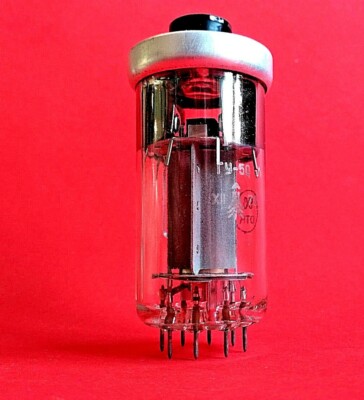
The story of the FU50 is a fascinating journey through 20th-century geopolitics and technology transfer. Its lineage begins not in an audio lab, but in wartime Germany with the Telefunken LS-50 power pentode. This robust tube was designed for radio frequency (RF) applications in military equipment. After World War II, its design was replicated in the Soviet Union as the GU-50 (ГУ-50), intended for use in military transmitters and RF amplifiers, capable of operating at frequencies up to 120 MHz. The Valve Museum notes its design was specifically for Russian mobile military equipment, featuring a distinctive top handle for quick replacement in the field.

This Soviet design and its manufacturing tooling eventually made their way to China. As discussed in forums like diyAudio, the Chinese tube industry was heavily influenced by Russian designs. The result was the FU50, a near-equivalent of the GU-50, initially produced for similar RF purposes. It was only later that the global Hi-Fi and DIY audio communities discovered its potential for high-quality sound reproduction, transforming this military workhorse into an audiophile darling.

GU-50 Vacuum Tube
The Soviet GU-50, a military-grade power pentode and the direct predecessor to the FU50

The "Little 300B": Analyzing the Sonic Signature

The FU50's reputation is built largely on its performance in audio amplifiers, particularly when wired as a triode in a single-ended configuration. This is where the "little 300B" comparison originates.

The Allure of Single-Ended Class A

Most FU50 amplifiers are single-ended Class A designs. This circuit topology is revered by audiophiles for its sonic purity. In a Class A amplifier, the output tube conducts current through the entire signal cycle, resulting in very low crossover distortion. As noted by audio experts, this design often produces a high level of even-order harmonic distortion, which the human ear perceives as musically pleasing warmth and richness. This "harmonic glow" is what gives many tube amps their signature "warm, lush, and musical" sound, making vocals and acoustic instruments feel more lifelike.

How Does It Really Sound?

User reviews and expert opinions paint a consistent picture of the FU50's sound. It's often described as having a "sweet and full warm vocal flavor." An amplifier from IWISTAO is praised for its ability to produce a sound that is "pure and delicate," with a "very strong tube taste."

However, it's not just about warmth. One experienced user on a diyAudio forum offered a compelling counterpoint, describing their FU50 amp in the highest terms of neutrality:

Like all the best amps I have ever listened to, built and/or owned, it recedes into the background. It has no character... One simply listens to the music – the amp does not “impress” the listener at all.

This suggests that while the FU50 can deliver classic tube warmth, it can also achieve a high degree of transparency, allowing the music to speak for itself without excessive coloration.

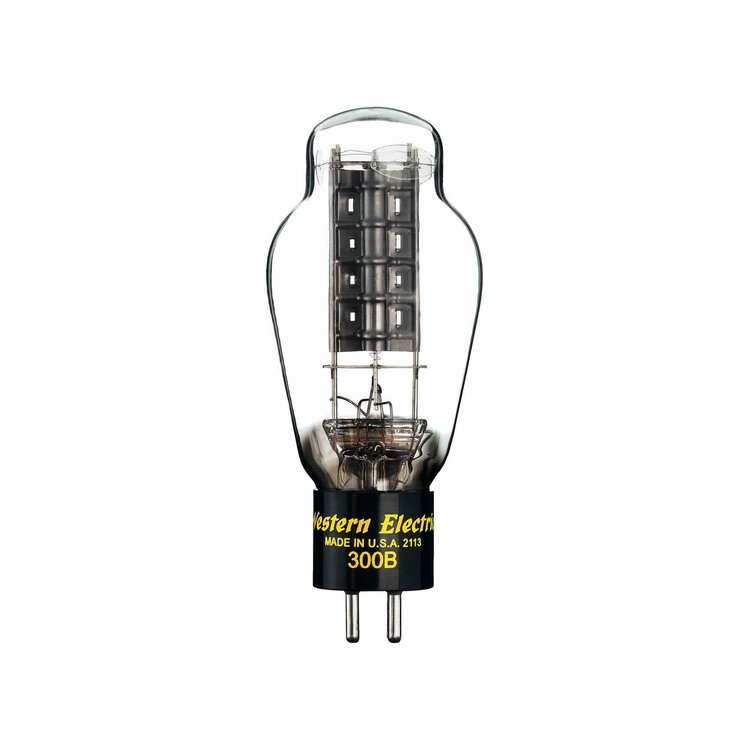
The 300B Comparison: Hype vs. Reality

The "little 300B" nickname stems from the claim that the FU50';s characteristic curves, when operated in triode mode, are very similar to those of the legendary Western Electric 300B. But does it truly measure up?

According to a detailed review on the Cheaptubeaudio blog, the FU50 gets remarkably close for its price. The reviewer notes that while a good 300B amplifier still possesses a more "organic and luscious" and "tonally sophisticated" sound, the FU50 is a formidable contender. It delivers a level of finesse that can outshine other budget single-ended amps based on tubes like the EL34 or 6L6. While it may not have the same power reserve or benign clipping characteristics as a true 300B, its performance-to-price ratio is almost unbeatable.

Western Electric 300B Tube
The legendary Western Electric 300B, the benchmark against which the FU50 is often compared

Anatomy of an FU50 Amplifier: Design and Circuitry

The appeal of FU50 amplifiers goes beyond their sound; their design, accessibility, and the culture around them are key parts of their story.

Common Circuit Topologies

Most FU50 amps use a single-ended circuit where the pentode FU50 is wired to operate as a triode. The choice of driver tube is a key design variation. Many kits and finished amps use the Soviet 6J8P (a pentode equivalent to the American 6SJ7) as a driver. This is significant because, as the Cheaptubeaudio review points out, this configuration bears a resemblance to the classic Western Electric 91A circuit, which famously used a pentode to drive the 300B triode. Another common option is the 6N8P (a double-triode equivalent to the 6SN7), which offers a different sonic flavor.

The DIY Spirit and Kit Culture

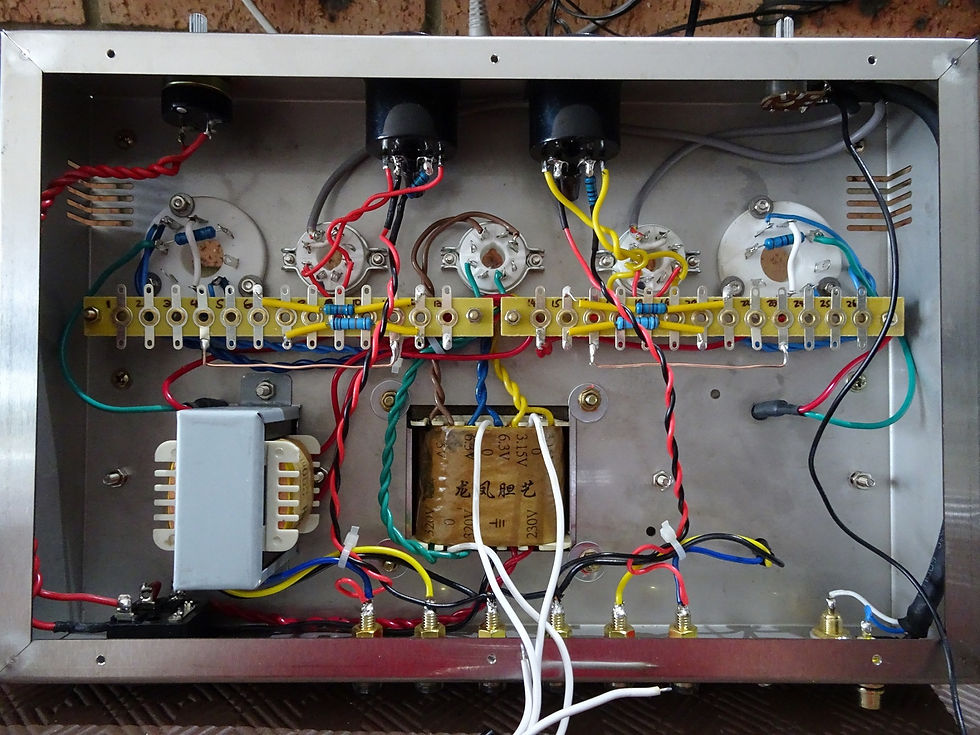
A major factor in the FU50's popularity is its embrace by the Do-It-Yourself (DIY) community. Thanks to the availability of inexpensive tubes and transformers from Chinese sources, building an FU50 amplifier is a highly accessible project. Brands like "Dragon & Phoenix" offer complete kits that include all parts and circuit diagrams.

Building from a kit can be a rewarding experience, but it's not without challenges. DIY builders often report needing to troubleshoot issues like transformer hum, which typically requires careful implementation of grounding techniques, such as a proper star earth ground, to resolve. The satisfaction of building your own high-quality tube amp, however, is a powerful motivator for many enthusiasts.

Internal wiring of a FU50 tube amplifier kit
The intricate hand-wired interior of a "Dragon & Phoenix" FU50 amplifier kit, showcasing the complexity of a DIY build

Build Quality and Features

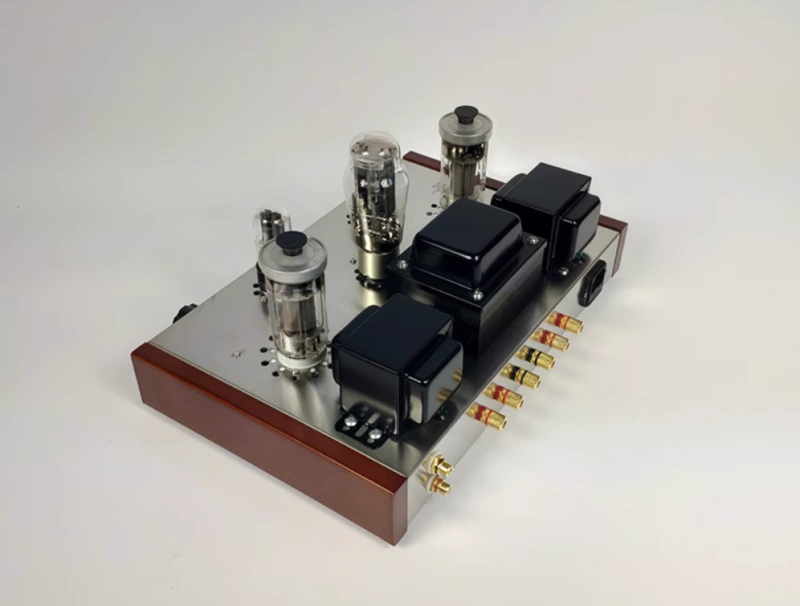
While DIY is a popular route, many commercially available FU50 amplifiers offer impressive build quality that belies their modest price. Reviewers frequently praise the "fabulous" construction of models like the BRZ FU-50, highlighting its luxurious milled aluminum chassis that surpasses many more expensive "high-end" offerings. These amplifiers are not just bare-bones circuits; modern designs often incorporate a range of features, including multiple switchable inputs for CD players, USB DACs, and even MM phono stages for turntables, making them versatile hubs for a complete audio system.

A finished FU50 tube amplifier
A finished FU50 amplifier, showcasing the high-quality build with a polished top plate and wooden side panels often found in commercial models

Getting the Most Out of Your FU50 Amp

To unlock the full potential of an FU50 amplifier, two factors are critical: speaker matching and tube selection.

The Importance of Speaker Matching

FU50 amplifiers are low-power devices, typically delivering between 8 to 13 watts per channel. This makes speaker pairing crucial. They perform best with high-sensitivity speakers (generally rated at 90 dB/watt or higher). Efficient speakers allow the amplifier to reach satisfying listening levels without being pushed into distortion. In contrast, power-hungry, low-sensitivity speakers are better suited for high-power solid-state amplifiers that can provide the necessary current and control.

Tube Rolling for Sonic Tweaks

"Tube rolling," or swapping out stock tubes for different, often vintage, alternatives, is a popular way to customize an amplifier';s sound. With an FU50 amp, changing the rectifier and driver tubes can yield significant sonic improvements. For instance, the Cheaptubeaudio review noted that replacing the stock Chinese 5Z4 rectifier with a vintage Chatham 5R4WGA resulted in a sweeter, more detailed sound. Similarly, swapping the stock FU-50 tubes for older Soviet-made versions can enhance texture and dynamics. This ability to tweak and refine the sound is a huge part of the appeal for tube enthusiasts.

Conclusion: The Verdict on the FU50 Amplifier

The FU50 amplifier is a remarkable paradox: a piece of Cold War military technology that has become a symbol of accessible, high-fidelity audio. It may not dethrone the legendary 300B, but the "little 300B" moniker is more than just marketing hype—it's a testament to the incredible sonic value this tube delivers.

For the budget-conscious audiophile, the DIY enthusiast, or anyone with efficient speakers looking for an entry point into the magical world of single-ended tube sound, the FU50 amplifier is an outstanding choice. It offers a listening experience that is pure, engaging, and deeply musical, proving that great sound doesn't always have to come with a high price tag. It has rightfully earned its place as a beloved champion in the global Hi-Fi community.

References

[2]
[4]
[5]
[6]
Fu-50 2*12w (rms) 6j8p Fu50 Tube Amplifier Stereo Single-ended ...
https://www.aliexpress.com/i/32982589478.html
[8]
Mid Trajectory 6J4/6P3P Preamp Beydas LS3/5A Clone Canare ...
https://cheaptubeaudio.blogspot.com/2022/12/mid-trajectory-6j46p3p-preamp-beydas.html
[11]
An Audio Amplifier Design Philosophy - Meta-Gizmo
https://www.meta-gizmo.org/tri/otlology/BERNINGS.htm

Wednesday, May 24, 2023

Liang Zhu from IWISTAO 2X40W FU29 Pull Push Vacuum Tube Amplifier

Liang Zhu from IWISTAO 2X40W  FU29 Pull Push Vacuum Tube Amplifier 


"The Butterfly Lovers Violin Concerto"  often abbreviated as "The Butterfly Lovers" or "Liang Zhu". 

We played it with FU29 pull-push vacuum tube amplifier.

This FU29 vacuum tube named FY29 in Russian, and named 829B in American. It is a composite vacuum tube in which two Cambodian tetrodes are packaged in a same glass shell. It is generally used in power amplifiers with push-pull output, which can reduce tube selection and matching trouble. FU29 filament voltage is 6.3V, current is 2.25A, screen voltage is 600V, curtain grid voltage is 200V, zero letter screen current is 40mA, full letter current is 110mA. The grid bias voltage is -18V, the optimal load impedance from the screen to the screen grid is 13750Ω, and the output power (effective value) reaches 44W when the signal is full.

In order to further simplify the circuit, this unit uses a composite tube 6N2 for preamplification and phase inversion, so that a single channel can use 6N2 and a FU29 to complete the power amplifier task, and it has 40W power output. It is small in size, unique in shape, but strong in driving force. Do not use the power of general transistors or digital power amplifiers to analogize the actual driving force of this tube power amplifier, because the high supply voltage and unique output transformer’s structure, its output internal resistance change for high and low frequency signals is relatively small, and it has a good low frequency driving ability. And the sound is soft and smooth, warm and delicate. This is why the tube amplifier has not been completely replaced after the emergence of many new technologies.


👇👇👇 

Thursday, March 30, 2023

The song Angel from 6F3 drive 300B Vacuum Tube Amplifier

The song Angel from 6F3 drive 300B Vacuum Tube Amplifier


Vacuum tube 300B is a mysterious vacuum tube with a long history, and don’t know how many music fans are fascinated. I still don’t know how many people are struggling to find its real voice. The audiophiles think that 300B is a female voice representative. But our 300B kit circuit is the embodiment of the sound of rigidity and softness. It is not only an attentive and charming woman, but also an iron and tender prince charming.


There are also rumors that the low frequency of 300B is not good. From an electrical point of view, the internal resistance of 300B is only about 800 ohms, which shows its damping coefficient is very good. Why is the rumors so? This is depended on the quality of the power supply, time constant of the circuit design and other reasons.


In fact, 300B tube is the best way to reflect the original atmosphere of music, because the tube’s characteristic curve distribution is excellent, coupled with second-harmonic sense of hearing, the mouth shape of the singer, the low-frequency tension of the chest resonance, its dynamics can be said to reach the perfect state, if regardless of the power, hundreds of thousands of transistor world-famous machines are difficult to surpass in the same power range as the 300B. From the acoustic point of view, the sound of the 300B tube amplifier is more expressive and richer, musical sense.
 

Our vacuum tube 300B kit has a unique acoustic and electrical regulatory concepts from the design to the selection of the output transformer.

The vacuum tube 6F3 is a relatively unpopular composite tube, which is quite a 12ax7+6p14 inside. Because of the large inventory, the price is related low, but its performance is extremely excellent, especially when it is connected as triode tube, which output internal resistance is particularly low, and linearity is good, driving 300B is absolutely no problem. In addition, many senior enthusiasts will inevitably ask, why use large loop feedback? This is our consideration of sound and stability. The large loop will sacrifice the transparency of mid and high frequencies. However, in order to improve the weakness of the low frequency of the tube, adopt the large loop can will make the internal resistance of the 300B tube amplifier lower, so that its overall sound balanced.

👇👇👇 🙌 🙌 🙌 🎺 🎺 🎺

Finished Vacuum Tube Amplifier:


DIY Vacuum Tube Amplifier Kits:

Tuesday, February 14, 2023

What is a pull-push output transformer?

What is a pull-push output transformer?


Output transformers are a crucial component of many electronic devices, particularly in audio equipment. An output transformer's role is to match the load impedance, such as a loudspeaker, to the amplifier output impedance. Different types of output transformers have their own advantages and disadvantages. In this article, we will focus on pull-push output transformers.

A pull-push output transformer is a type of transformer used in push-pull amplifiers. In a push-pull amplifier, two transistors or vacuum tubes are used, each handling half of the signal. The pull-push output transformer is designed to combine the signal from both halves of the amplifier into a single output.

The term "pull-push" refers to the way the output transformer is wired. In a pull-push output transformer, the two halves of the transformer are wired in opposite directions. One half of the transformer "pulls" the current, while the other "pushes" the current. This cancels out any magnetic fields generated by the current flowing through the transformer, resulting in a cleaner output signal.

One of the primary advantages of a pull-push output transformer is that it can handle higher power levels than other types of output transformers. The push-pull configuration allows the use of two output devices, each handling only half of the signal. This reduces the amount of power each device needs to handle, allowing for higher power output without the risk of damaging the output devices.

Another advantage of pull-push output transformers is that they can provide a balanced output. A balanced output is important in audio applications because it helps to reduce the amount of noise and interference in the signal. By using a pull-push output transformer, the signal is split into two equal parts, with each half being inverted from the other. This creates a balanced signal that is less susceptible to noise and interference.

In addition to these advantages, pull-push output transformers are also relatively easy to design and build. They can be constructed using standard transformer winding techniques, and there are many commercially available options for those who don't want to build their own.

However, there are also some disadvantages to using pull-push output transformers. One of the main drawbacks is that they can be more expensive than other types of output transformers. This is because they require more winding wire and more complex winding techniques.

Another potential disadvantage of pull-push output transformers is that they can be more challenging to tune. The balanced output requires precise matching of the two halves of the transformer, which can be challenging to achieve.

In conclusion, pull-push output transformers are a popular choice for high-power audio amplifiers due to their ability to handle high power levels and provide a balanced output. Although they may be more expensive and challenging to design and tune than other types of output transformers, their advantages make them a popular choice for many audio enthusiasts and professionals.

Now, some people asked us what is P1, G1, B+, P2, and G2 of a pull-push output transformer?

The terms P1, G1, B+, P2, and G2 are commonly used to describe the winding connections of a push-pull output transformer in a vacuum tube amplifier. These connections are similar to those used in a pull-push output transformer, but the naming convention is slightly different. Here is a brief explanation of what each term means in a vacuum tube push-pull output transformer:

P1 and P2: These are the primary windings of the transformer. P1 is connected to the plate of one vacuum tube, while P2 is connected to the plate of the other tube. The primary windings are where the amplified signal is applied.

G1 and G2: These are the center-tap connections of the primary windings. They are used to provide a balanced output signal. G1 and G2 are usually connected to ground in the amplifier circuit.

B+: This is the high-voltage power supply connection of the transformer. It is where the high voltage DC power supply is connected to power the vacuum tubes.


There are some examples as below, in order to understanding well. This diagram is for 2x25W pull-push vacuum tube amplifier, and for EL84, 6P1 tubes.


2X25W EL34 pull-push vacuum tube amplifier

EL84 pull-push vacuum tube amplifier


6P1 pull-push vacuum tube amplifier


Audio Note EL84 Pull Push Tube Amplifier

Monday, November 14, 2022

Deep and rich man's voice from The Ballad on a Boat

Deep and rich man's voice from The Ballad on a Boat 

The deep and rich man's voice from The Ballad on a Boat, sourced from CD player.

And the power amplifier is 300B single-ended vacuum tube amplifier, which adopts the famous Audionote circuit. Its power transformer and output transformer are carefully wounded by British Red Bull iron core. The advanced HI-FI design without large loop feedback makes the sound delicate and lingering, and rich musical.

Its preamplifier used vacuum one pair tube 5678, and the signal to tube 6H8C, then drive tube 300B.

It built with pure hand scaffolding process, and high quality output transformer and power transformer, choke coil with Red Bull Sands silicone steel sheet.


More details  👇 👇 👇

Monday, July 11, 2022

Melodious violin sound from Shuguang 211 Vacuum Tube amplifier & HIFI 2 way bookshelf speaker

Melodious violin sound from Shuguang 211 Vacuum Tube amplifier & HIFI 2 way bookshelf speaker

Vacuum tube 211 is a self-heating three-pole vacuum tube for class A, B, C amplification, which is similar to GL-211 UV-211 and can be used interchangeably.


👇 👇 👇

Wednesday, June 2, 2021

IWISTAO Tube Amplifier Mono-block Integrated West Electric Master 2x8W Vacuum Tube 6F3 Drive 300B 5Z2P Rectifier

IWISTAO Tube Amplifier Mono-block Integrated West Electric Master 2x8W Vacuum Tube 6F3 Drive 300B 5Z2P Rectifier


It is a dream vacuum tube 300B power amplifier with mature circuit design and handmade. Adopting a special high-performance output transformers, will give you a true 300B tone, slender high frequencies (rich triangle iron harmonics), full mid-range maturity, deep dive at low frequencies, and full tension (the tightness of the drum leather can be felt, and low-frequency dark surge) The ranking of the musicians, expression of the singer, and gesture of playing are fully displayed in front of our eyes. This unit also has a secret weapon, put on the tube cover, the sound is arrogant and dynamic, low-frequency control is excellent, bare tube sound is like lingering and soft, the drizzle in the autumn wind.


This unit is driven by an antique famous tube 6F3 (6BM8) composite tube, and its sound is delicate (0.8MA, U: 55 small signal amplifier triode; if 6SN7, requires 3-4ma,U: 13-15), and its dynamic range is large (-11v, u: 10 driver level; if 6sn7, -6v, u: 13), strong driving force (110vpp) is enough to drive the tube 300B (-70v), reduce distortion, and noble sound naturally comes to life!

At the same time, the high-performance packaged output transformer, adopts a complex process and a high-tech design with imports Red Bull Iron Core 86 * 45 from United Kingdom. Selected high-quality enameled wires, CNC drying, vacuum dipping, moisture-proof packaging, and refining Made.

Also it adopts reasonable wiring layout, purely build a shed, reduce the distributed capacitance, and make the high-frequency expansion wider. Reasonable foreign old-fashioned supplementary accessories, and after one year adjusting sound, it is recommended not to modify or upgrade other vacuum tubes. We pursue perfect sound,  this 300B tube amplifier is already tuned to a sound limit level after assembled above accessories , and it conveys the spirit of music and culture.

More details, please find here 🎵🎵🎵🎶🎶🎶

Monday, July 20, 2020

Saturday, May 16, 2020

Friday, April 17, 2020

Monday, October 22, 2018

IWISTAO 300B Bluetooth Tube Amplifier with CSR8670

IWISTAO 300B Bluetooth Tube Amplifier with CSR8670

This is a 300B vacuum tube amplifier with Bluetooth 4.2 technology. Built-in CSR8670 module, you can connect your Bluetooth enabled devices via wireless connect, also can play stream music.

There is a demo below.