Showing posts with label transmission line speaker. Show all posts

Thursday, December 25, 2025

Designing a 40 Hz Transmission Line Loudspeaker

Designing a 40 Hz Transmission Line Loudspeaker

Published by IWISTAO

An Engineering Case Study Using the Markaudio CHN-110

Transmission Line (TL) loudspeaker enclosures are widely regarded for their ability to extend low-frequency response while preserving transient accuracy and smooth impedance behavior.

This article presents an engineering-grade transmission line enclosure design optimized for the Markaudio CHN-110 full-range driver, targeting an acoustic F3 of 40 Hz.


1. Design Objectives

  • Achieve a true low-frequency extension of F3 ≈ 40 Hz
  • Avoid Helmholtz resonance artifacts typical of bass-reflex enclosures
  • Maintain smooth impedance behavior for Class-A and tube amplifiers
  • Control cone excursion at low frequencies
  • Prioritize transient accuracy and tonal linearity

2. Driver Selection

The selected driver for this study is the Markaudio CHN-110, a 110 mm full-range unit known for its wide bandwidth and moderate total Q.


Mark HIFI 6.5 Inch Full Range Speaker Unit 1 Pair Metal Cone 8 Ohms 40-80W 89Db 41Hz-22KHz

Key Thiele–Small parameters (manufacturer data):

  • Fs ≈ 44.2 Hz
  • Sd ≈ 109 cm²
  • Qts ≈ 0.42
  • Vas ≈ 24.7 L

The moderate Qts makes the CHN-110 particularly suitable for quarter-wave acoustic loading rather than aggressive bass-reflex tuning.


3. Quarter-Wave Transmission Line Theory

Unlike bass-reflex enclosures, which rely on Helmholtz resonance, a transmission line enclosure operates primarily on quarter-wave acoustic resonance. The fundamental design relationship is:

L = c / (4 × f)

where L is the effective acoustic line length, c is the speed of sound (approximately 343 m/s), and f is the target frequency.

For a target F3 = 40 Hz:

L ≈ 2.14 m

After accounting for acoustic damping, which increases the effective acoustic length, the physical folded line length is approximately 1.9 m.


4. Line Geometry and Enclosure Volume

Cross-Sectional Area

Engineering practice derived from quarter-wave modeling recommends that the starting cross-sectional area of the transmission line be proportional to the driver’s effective cone area:

S0 ≈ (1.0–1.2) × Sd

For this design:

  • Start of line: ~120 cm²
  • End of line (tapered): ~65 cm²

A gentle taper helps suppress higher-order standing waves while preserving low-frequency loading.

Effective Acoustic Volume

Unlike bass-reflex enclosures, a transmission line does not have a single tuning volume. Instead, its effective acoustic volume is defined by:

VTL = ∫0L S(x) dx

where S(x) is the cross-sectional area of the line as a function of distance, and L is the effective acoustic line length. For practical engineering work, this relationship is commonly approximated as:

VTL ≈ Savg × L

  • Effective acoustic volume: ~18 L
  • Total structural enclosure volume: ~21–22 L

5. Predicted System Performance

Impedance Behavior

The transmission line system exhibits a single, low-Q impedance peak centered near 40 Hz, in contrast to the dual-peak impedance characteristic of bass-reflex enclosures. This results in improved amplifier stability and excellent compatibility with tube amplifiers.

Frequency Response

The predicted frequency response demonstrates smooth low-frequency extension with a −3 dB point at approximately 40 Hz, without the artificial bass emphasis typically associated with port tuning.

Cone Excursion

Because the transmission line continues to provide acoustic loading below resonance, cone excursion remains better controlled than in an equivalent bass-reflex enclosure, particularly in the 40–60 Hz region.


6. Comparison with a Bass-Reflex Enclosure

Aspect Bass-Reflex Transmission Line
Low-frequency mechanism Helmholtz resonance Quarter-wave resonance
Impedance behavior Dual peaks Single smooth peak
Group delay Higher near tuning Lower and smoother
Port noise Possible None
Subjective bass Emphasized Natural and linear

7. Practical Construction Notes

  • Folded internal path using a three-section “Z” or “S” layout
  • Cabinet material: 18 mm MDF or birch plywood
  • Heavier damping near the driver, moderate in the middle, minimal near the terminus
Z fold TL speaker design concept diagram


8. Conclusion

This engineering study demonstrates that a properly designed damped transmission line enclosure allows the Markaudio CHN-110 to achieve a genuine 40 Hz low-frequency extension without relying on aggressive bass-reflex tuning. Compared to enclosures of similar size, the TL approach offers smoother impedance behavior, improved cone control, and superior transient fidelity, making it an excellent choice for high-quality full-range loudspeaker systems.


References

  1. Martin J. King, Transmission Line Loudspeaker Design
    https://www.quarter-wave.com/
  2. Martin J. King, Anatomy of a Transmission Line Loudspeaker (PDF)
    https://www.quarter-wave.com/TLs/TL_Anatomy.pdf
  3. G. L. Augspurger, “Transmission Lines Updated,” Journal of the Audio Engineering Society, 1980
  4. Markaudio Loudspeakers Ltd., CHN-110 Datasheet
    https://www.markaudio.com/
  5. Wikipedia, “Transmission Line Loudspeaker”
    https://en.wikipedia.org/wiki/Transmission_line_loudspeaker

Sunday, September 28, 2025

Deep Bass in Small Spaces: A Bookshelf Transmission Line Project

Deep Bass in Small Spaces: A Bookshelf Transmission Line Project

Published by IWISTAO 

In the world of DIY audio, some pairings feel like destiny. The purity of a single full-range driver, free from the complexities of a crossover, is one such siren call. The other is the transmission line (TL) enclosure, an "acoustic labyrinth" promising bass that is deep, articulate, and devoid of the common boominess of ported boxes. But what happens when you try to merge these two ideals into a compact, bookshelf-friendly form factor? This is where the real magic—and the real challenge—begins. We're embarking on a journey to design a bookshelf TL speaker around a common full-range driver with a resonant frequency (Fs) of 55 Hz. It's a quest to defy physics and coax profound bass from a small space.

There is an example for a bookshelf transmission line speaker as below.


The Dream Team: Full-Range Drivers and Transmission Lines

For many audiophiles, the combination of a full-range driver in a transmission line enclosure is the pursuit of an ideal. A single driver handles the entire frequency spectrum, eliminating the phase shifts and sonic discontinuities that can be introduced by crossover networks. The result is often described as a remarkably coherent and life-like soundstage. The transmission line complements this by tackling the most significant challenge for any small driver: low-frequency reproduction. Instead of simply trapping or crudely venting the driver's rear sound wave, a TL guides it down a long, damped path. As one source puts it, the goal is to take this back wave, invert its phase, and use it to reinforce the front wave, extending the bass response cleanly and powerfully .

The 55 Hz Conundrum: Quarter-Wavelength vs. The Bookshelf

Here's where our 55 Hz driver throws down the gauntlet. The foundational principle of a classic transmission line is the "quarter-wavelength rule." To get the exiting back wave in phase with the front wave at the driver's resonant frequency, the line's length should be one-quarter of that frequency's wavelength. Let's do the math.

The speed of sound in air is approximately 344 meters per second. The wavelength (λ) for our 55 Hz target is 344 m/s ÷ 55 Hz, which equals about 6.25 meters. A quarter of that is roughly 1.56 meters (about 5.1 feet). Now, the problem is obvious: how do you fit a five-foot-long pipe inside a box that can reasonably be called a "bookshelf" speaker? The answer lies in clever acoustic engineering: folding the line intricately within the cabinet, like a maze, and the strategic use of damping material.

Taming the Labyrinth: The Art and Science of Damping

An empty, folded pipe would be an acoustic disaster, creating a series of unwanted resonances, or "pipe organ" effects, that would ruin the sound. This is where damping material—the "soul" of the design—comes in. Stuffing the line with materials like long-fibre wool, polyester batting (Poly-fil), or acoustic foam serves two critical purposes.

First, it acts as a low-pass filter, absorbing the upper-bass and midrange frequencies of the back wave. This ensures that only the very lowest frequencies, which are less affected by the damping, emerge from the line's terminus, preventing coloration and smearing of the stereo image.

Second, and crucially for our bookshelf design, the damping material effectively slows the speed of sound within the line. This acoustic trick means a physically shorter line can be tuned to a lower frequency. The exact amount and density of stuffing is a delicate balancing act; too little and you get resonances, too much and you choke the bass output entirely. This is why TL design has historically been a process of painstaking trial and error, as noted by many DIY builders on forums like diyAudio.

From Blueprint to Box: Practical Design Choices

With the core principles in mind, let's move from theory to the practicalities of the build.

The Heart of the Matter: Choosing the Right Driver

Our starting point is a driver with an Fs of 55 Hz. But other Thiele-Small (T/S) parameters are just as important. For transmission lines, drivers with a low total quality factor Qts), typically below 0.4 or 0.5, are often preferred as they have better internal damping and control. A driver like the Tang Band W5-2143, with an Fs of 55 Hz and a Qts of 0.38, is an excellent real-world candidate for this project . The driver must also have a rigid cone to handle the air load of the long line without deforming.

Shaping the Sound: Line Geometry and Tapering

The shape of the line itself is a key design variable. While a constant cross-section line is simplest, many modern designs employ a tapered line that narrows from the driver towards the port. This tapering can help to suppress higher-order harmonics and smooth the overall frequency response. The initial cross-sectional area of the line is typically chosen to be between one to three times the driver's cone area (Sd), providing a good starting point for simulations.

The Exit Strategy: The Port and MLTLs

In its purest form, the end of the transmission line is simply an open terminus. However, a popular and highly effective variation is the Mass-Loaded Transmission Line (MLTL). As described by resources like Neurochrome, an MLTL is essentially a quarter-wave enclosure that also incorporates a tuned port. This hybrid design blurs the line between a pure TL and a bass-reflex box, allowing the port to act as a resonator to further shape and extend the low-frequency output, offering another layer of tuning flexibility.

The Modern DIY Advantage: Simulation Before Sawdust

For decades, designing a successful TL was a dark art. Pioneers like Perry Marshall, who derived his own mathematical models in the 1990s out of frustration with the lack of tools, highlight the historical difficulty . Today, the landscape has been transformed by powerful and accessible software.

The work of pioneers like Martin J. King, whose MathCad worksheets became a foundational resource for the DIY community, demystified the process . More recently, software like SpicyTL, which runs on the free LTspice circuit simulator, has provided an even more modular and intuitive way to model complex TL geometries, including tapering and damping effects . These tools allow you to simulate the entire system—driver, enclosure, and stuffing—and predict the frequency response with remarkable accuracy, turning what was once guesswork into a repeatable engineering process.

Conclusion: A Sound That Breathes

Designing a bookshelf transmission line speaker around a 55 Hz full-range driver is an ambitious project, but it is far from impossible. It represents a fascinating intersection of acoustic theory, clever packaging, and artistic tuning. By leveraging modern simulation tools to navigate the complexities of line length, folding, and damping, today's DIY builder can overcome the physical constraints of a small enclosure.

The reward for this effort is not just a speaker, but an experience. It's the satisfaction of creating a compact system that delivers a low-frequency performance of remarkable depth, clarity, and texture—a sound that, as its most ardent fans would say, doesn't just rumble, but truly breathes.

Reference

[1]
Transmission Line Speaker Calculation | Perry …
https://www.perrymarshall.com/articles/industrial/transmission-line/
[2]
Design Mass-Loaded Transmission Line Speakers | Neurochrome
https://neurochrome.com/pages/designing-mltl-speakers
[4]
A Viscous Damping Model of a Transmission Line …
http://www.quarter-wave.com/Horns/TL_and_BLH_Physics.pdf
[5]
[8]
Tang Band W5-2143 - 5″ Full-range 8Ω - Loudspeaker …
https://loudspeakerdatabase.com/TangBand/W5-2143
[9]
Transmission Line Speaker – Build Plan - soundblab.net
https://soundblab.net/product/transmission-line-speaker-build-plan/
[10]
Transmission line speaker design – Acoustical labyrinth
https://audiojudgement.com/transmission-line-speaker-design/

Thursday, July 24, 2025

Beyond the Box: My Journey into IWISTAO's Transmission Line Speakers

Beyond the Box: My Journey into IWISTAO's Transmission Line Speakers

Beyond the Box: My Journey into IWISTAO's Transmission Line Speakers

The audiophile's journey is a perpetual quest. We chase that elusive, perfect sound—a sound so real you can almost touch it. But what if the biggest leap forward isn't in the electronics, but in the very box that houses the sound? I recently tumbled down a fascinating rabbit hole, one that led me away from the familiar worlds of sealed and ported speakers and into a winding, intricate maze: the transmission line speaker, brought to life by IWISTAO.

What is a Transmission Line Speaker, Anyway?

Before we dive into the IWISTAO experience, let's demystify the technology. Most speakers you see are either sealed (acoustic suspension) or ported (bass reflex). A transmission line (TL) enclosure is a different beast entirely. Instead of trapping or simply venting the sound wave from the back of the driver, a TL design guides it through a long, folded, and damped internal pathway—an acoustic labyrinth.

The goal? To control this powerful rear energy. The length of this internal line is precisely calculated, often based on the ";quarter-wavelength rule." As the sound travels down this path, its phase shifts. By the time the lowest frequencies emerge from the port, they are in phase with the sound from the front of the driver. As one source explains, this reinforces the low-bass frequencies while avoiding the "boominess" or distortion common in other designs . The result is a cleaner, more extended, and incredibly natural bass response.

Enter IWISTAO: The Accessible Audiophile Dream

Historically, transmission line speakers were complex and expensive to build, often reserved for high-end, boutique brands. This is where IWISTAO changes the game. Operating in the burgeoning world of "Chi-Fi," IWISTAO has made a name for itself by offering high-quality audio components, from tube amplifiers to speaker cabinets, at prices that don't require a second mortgage.

What's particularly exciting for hobbyists is that IWISTAO offers beautifully crafted, empty transmission line enclosures. This opens the door for DIY projects, allowing you to pair their cabinets with your choice of full-range drivers. It’s an invitation to create a bespoke Hi-Fi setup that, as one reviewer noted, can rival much more expensive systems . This blend of accessibility and high-end design philosophy is what drew me in.

The Experience: From Box to Bliss

First Impressions: Solid Wood and Serious Craftsmanship

My journey began with a pair of IWISTAO';s 4-inch full-range speaker enclosures. Unboxing them was a revelation. These aren't your typical MDF boxes. The cabinets are made from 18mm solid oak, finished with a natural wood wax that highlights the grain. They feel dense, sturdy, and reassuringly heavy. The attention to detail is evident everywhere: from the gold-plated pure copper terminals to the small copper feet designed to minimize resonance. It’s a level of craftsmanship that immediately signals that you’re dealing with a serious piece of audio equipment.

The Sound: Warm, Detailed, and Alive

After installing a pair of well-regarded full-range drivers—a straightforward process—it was time for the moment of truth. The sound that emerged was nothing short of captivating. The defining characteristic is a sense of balance and naturalness. Vocals are crystal clear and present, mid-range instruments have texture and detail, and the highs are crisp without a hint of harshness.

One review described the stereo imaging as "almost holographic," and I have to agree . There's a depth and coherence to the soundstage that makes you feel like you're in the room with the musicians. It’s a sound that is both analytical enough for critical listening and warm enough to simply get lost in for hours.

The Bass Conundrum

So, what about that famous transmission line bass? With small full-range drivers, you can't expect earth-shattering lows. However, the labyrinth design works its magic, extending the bass response to a surprising degree. The bass is tight, tuneful, and articulate—you hear the notes, not just a muddy thud. For jazz, acoustic, and vocal tracks, it's perfect. For genres that rely on deep, sub-bass frequencies, a reviewer rightly suggests that adding a subwoofer would round out the experience . But the quality of the bass that *is* there is exceptional.

Amplifier Versatility

Many full-range speakers are designed with tube amplifiers in mind, and the IWISTAO enclosures certainly sing when paired with one, delivering a warm, lush presentation. But I was pleasantly surprised to find they performed just as admirably with a clean solid-state amplifier. This versatility means they can slot into almost any existing setup, which is a huge plus for anyone looking to experiment without overhauling their entire system.

Why Walk the Line? TL vs. The World

The experience left me wondering why transmission lines aren't more common. Compared to their sealed and ported cousins, a well-designed TL offers distinct advantages. According to Sanders Sound Systems, the design effectively damps the woofer's motion, leading to superb transient response—the speaker stops when the signal stops, eliminating the "overshoot and ringing" that can make bass sound muddy or slow .

A properly built T/L is utterly clean, has excellent deep bass extension, no overshoot or ringing, no resonances, and superb transient response.

While sealed boxes are praised for "tight"; bass, they can lack deep extension. Ported boxes can go deep but risk sounding boomy and less precise. The transmission line seems to offer the best of both worlds: the accuracy of a sealed box with the extended, effortless bass of an open design.

Final Thoughts: Is the Labyrinth for You?

My DIY project with the IWISTAO transmission line enclosures was more than just an experiment; it was a rediscovery of the joy of listening. These speakers prove that you don't need to spend a fortune to achieve a truly high-fidelity sound. They offer a unique combination of beautiful craftsmanship, sophisticated acoustic design, and incredible value.

If you're a DIY audio enthusiast or simply a music lover looking for a sound that is balanced, natural, and deeply engaging, I wholeheartedly recommend exploring what IWISTAO has to offer. Building your own speakers is a rewarding journey, and with a foundation as solid as this, the destination is pure sonic bliss.

References

[1]
Ported versus sealed speakers: is one type better? - Audiogon Forums
https://forum.audiogon.com/discussions/ported-versus-sealed-speakers-is-one-type-better
[9]
How do transmissions lines differ from ported and vented speakers?
https://pmc-speakers.com/faq/how-do-transmissions-lines-differ-ported-and-vented-speakers/
[11]
[12]
Sealed vs ported — How to choose a subwoofer box - Crutchfield
https://www.crutchfield.com/learn/sealed-or-ported-subwoofer-enclosures.html

Thursday, July 10, 2025

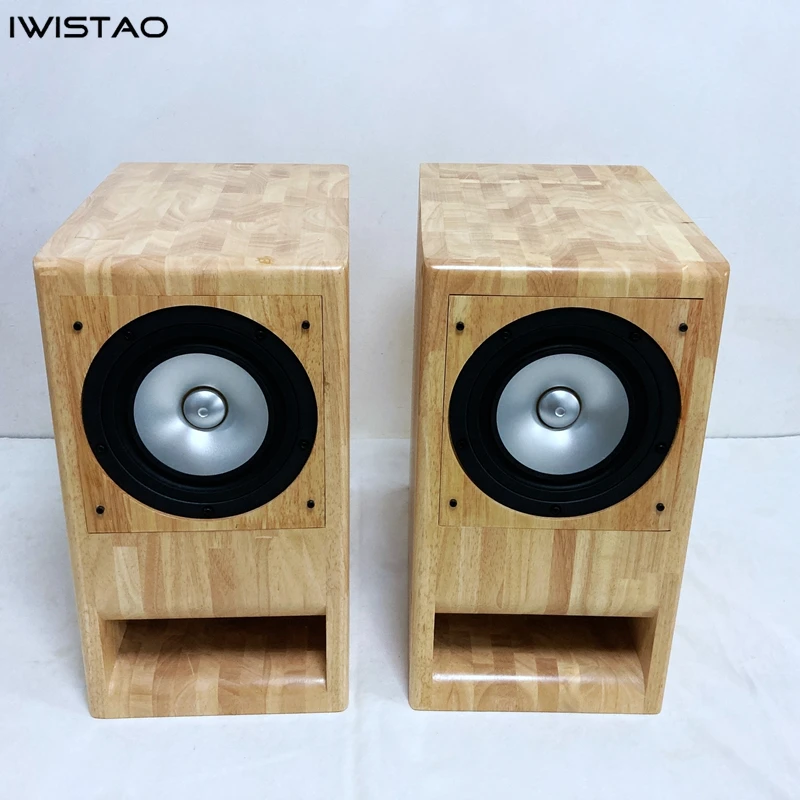
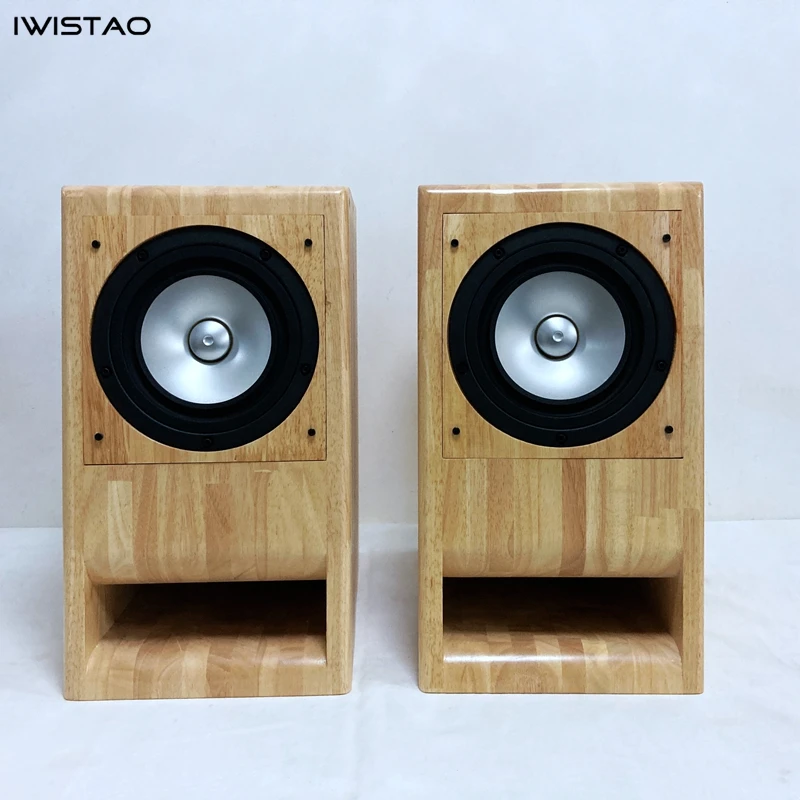
IWISTAO 8 Inch Transmission Liine Finished Speaker Solid wood with Mark 8 Inch Full Speaker Unit

IWISTAO 8 Inch Labyrinth Finished Speaker Solid wood with Mark 8 Inch Full Speaker Unit


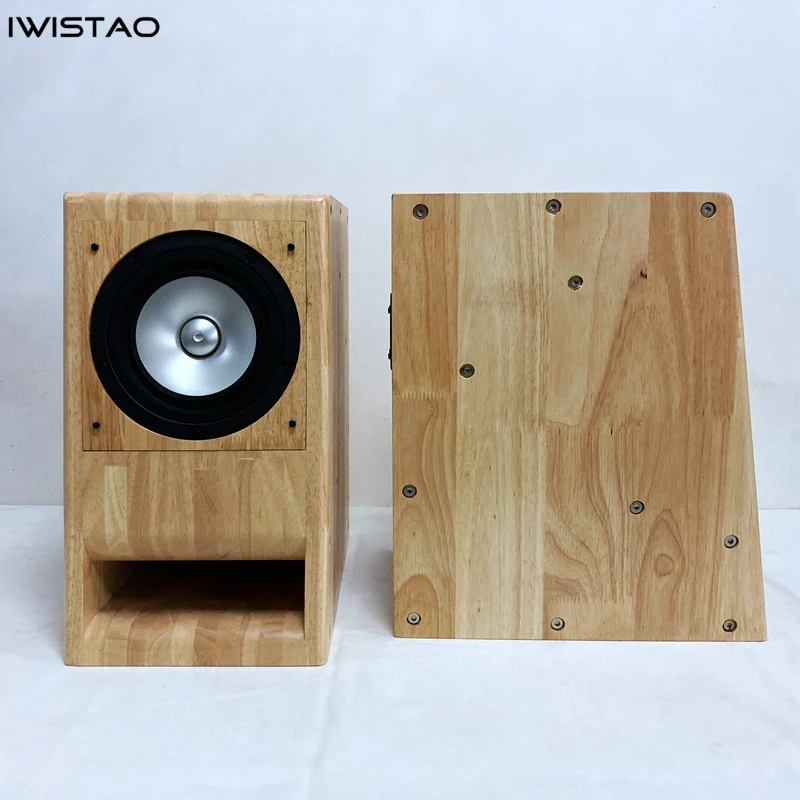
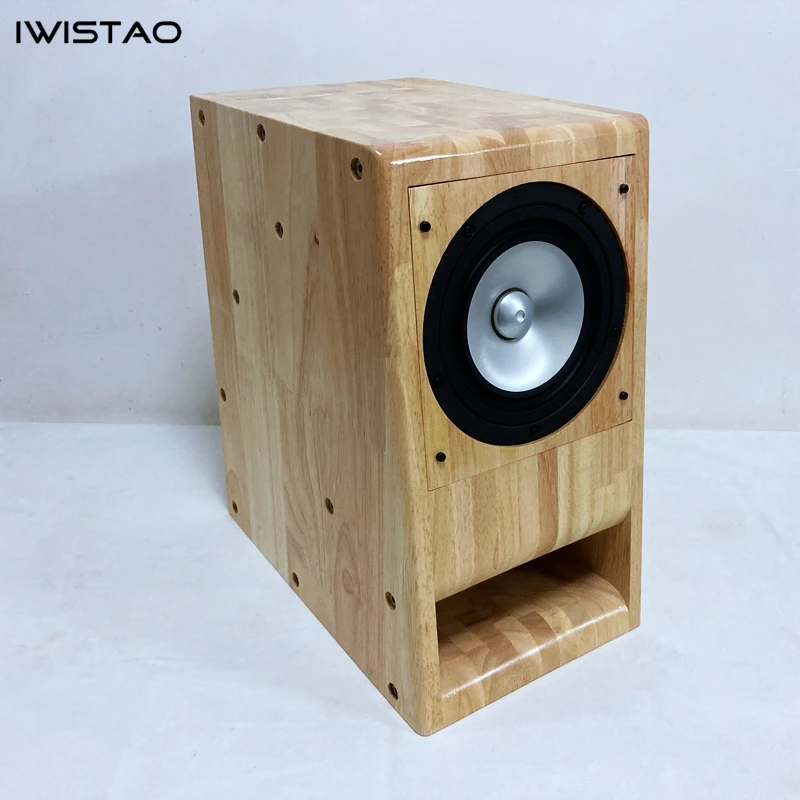
Speaker cabinet adopt double back guide pipe, its return passage measured about 1.6 meters, and sound quality is relatively pure. Its panel can be replaced if you have spares.


All  Material: plate is solid wood;


And the full range speaker unit is used Mark 8 inches full range CHN120.


Thursday, July 13, 2023

IWISTAO HIFI 4 Inches Full Range Speaker Heighten Empty Labyrinth Cabinet

IWISTAO HIFI 4 Inches Full Range Speaker Heighten Empty Labyrinth Cabinet


This speaker cabinet is made of solid wood. Built-in a labyrinth structure, its height has been increased, then its transmission line channels will become longer, can enhance the low-frequency radiant energy, make low-frequency dive deeper, effectively overcoming insufficient bass of commend full range speaker cabinet, make the speaker cabinet the full-frequency be more full and rich.


👇 👇 👇